
We have previously tested the TP-Link Archer BE230, which delivered Wi-Fi 7 at a price that everyone could afford. The design was classic ‘router-like’ with protruding antennas and a black plastic box that looked like something Batman might have accidentally left on his bedside table.
Now we’ve got our hands on its more sophisticated big brother, the Archer BE450. And even though we’re dealing with two models that, at least in name, belong to the same series, the experience is completely different. Both visually and technically.
The price is in the same class as its little brother. But for that money, you get a machine that, on paper, outperforms the cheaper model.
Aerodynamic ornament
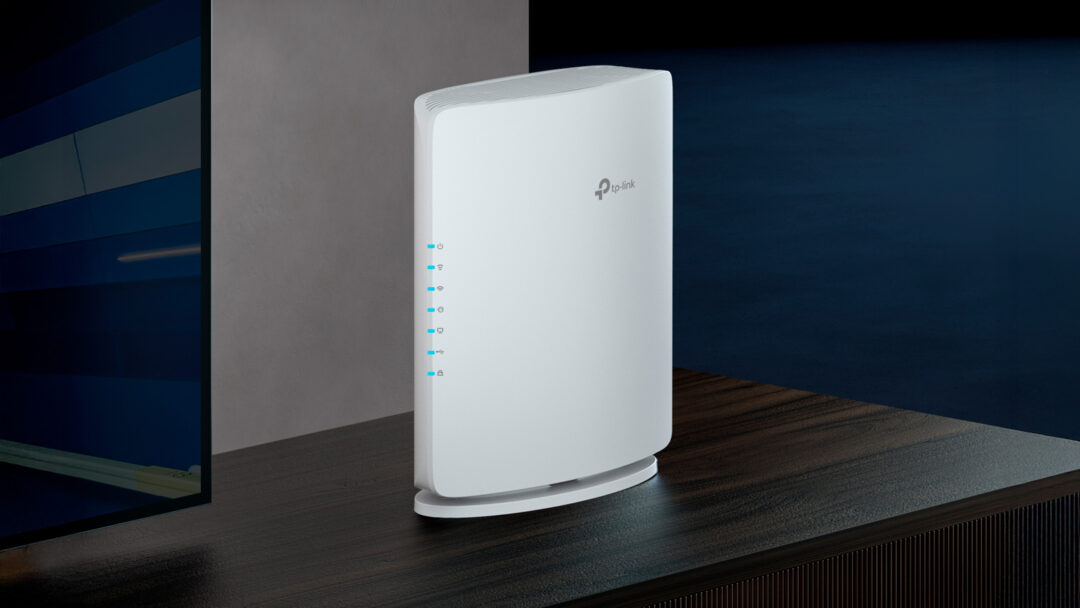
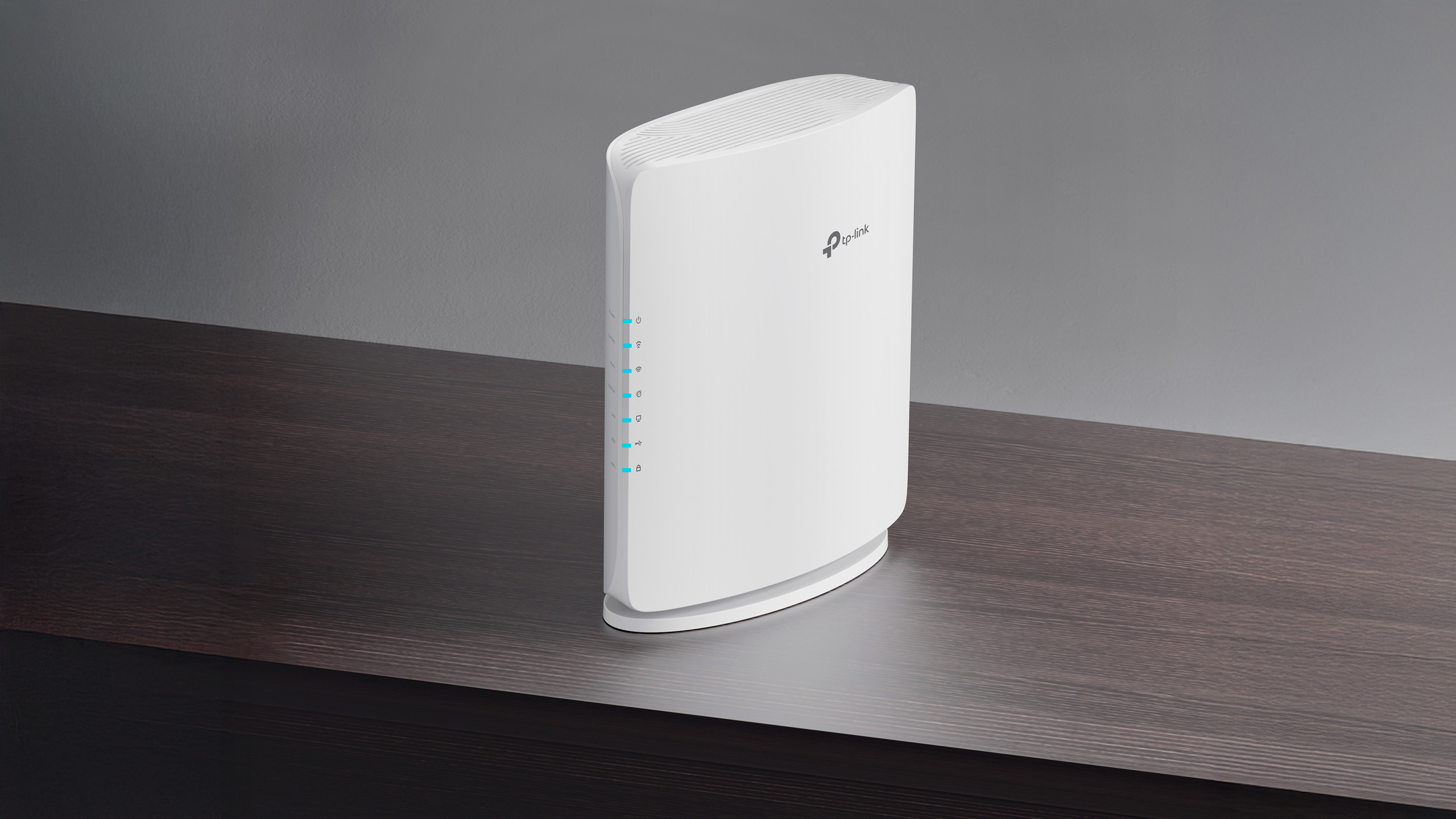
Where the BE230 resembled a piece of industrial equipment, TP-Link clearly had a lifestyle architect on the team when they designed the BE450. The device is white and has a slightly curved shape reminiscent of a modern game console that has shrunk in the wash.
There are no visible antennas. The five antennas are hidden inside the casing. It looks great, and it will certainly make it easier to get your partner’s approval to place the router where it is most useful: in the middle of the living room and up high.
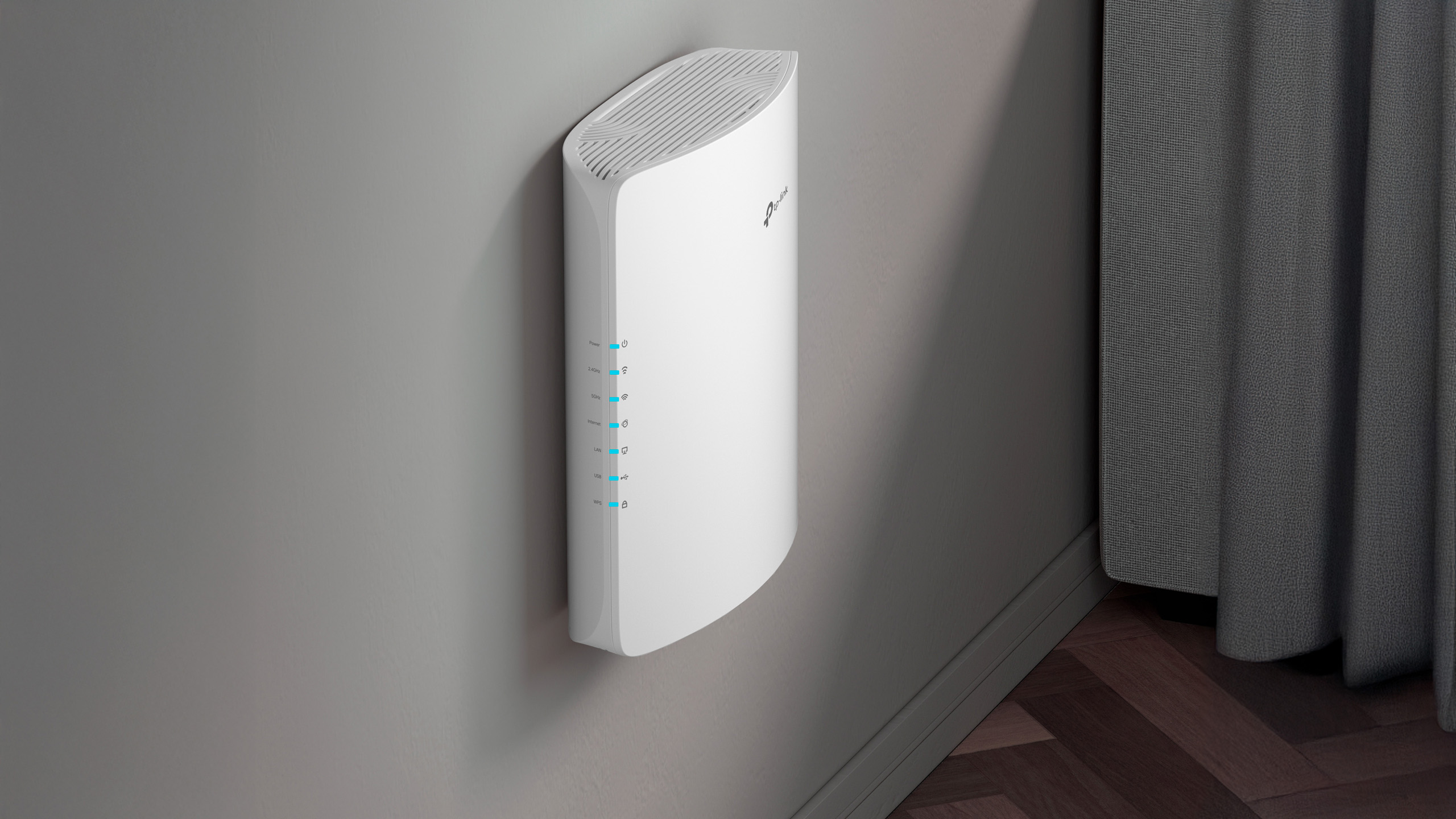
A nifty design detail is the base: it can either be clicked into place under the device so that it stands stably on a table. Or it can be used as a wall mount, in which case it fits into two notches on the side of the router.
10 Gigabit in the back – and reality in the wall socket
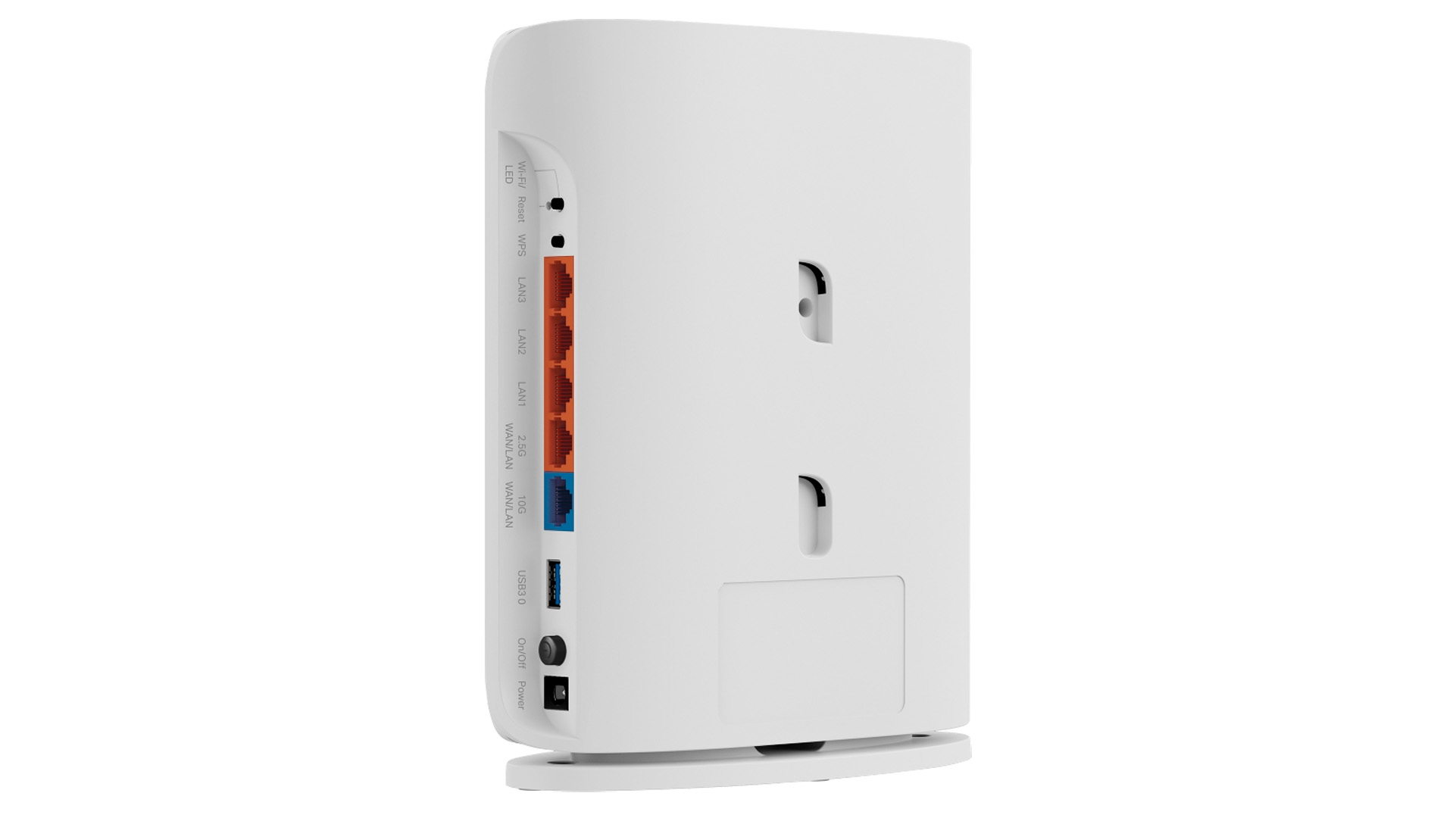
However, the most striking thing about the Archer BE450 is not its demonstratively inconspicuous appearance, but the back. Here you will find an Ethernet port that supports a full 10 Gbit/s. This is a bandwidth that you would normally have to pay much more for.
In addition, there is a 2.5 Gbit port and three standard Gbit ports. In practice, this means that you are future-proofed until the day your internet provider offers speeds faster than the speed of light.
And that day may seem a long way off for most people. Currently, only a few providers offer more than a 1 Gbit connection to private individuals. And in practice, many still have a connection that is a quarter of this.
For the rest of us with a ‘normal’ connection, the port is a bit of overkill – but it’s nice to know that the bottleneck is not in the router when the fibre cables are glowing one day.
It should be noted that if you are among the select few who actually have 10 Gbit in your home, you can only enjoy the speed wirelessly (the router has a maximum Wi-Fi speed of 7,200 Mbit). Since there is only one 10 Gbit port, you cannot transmit the signal at full speed via cable to your PC or NAS. But at this price, it would be ungrateful to complain.
Wi-Fi 7 across two bands
Like its little brother, the BE230, the Archer BE450 offers a stripped-down version of Wi-Fi 7. You’ll have to do without the new, lightning-fast 6 GHz frequency band, which is otherwise the big selling point of the Wi-Fi 7 standard. The router runs exclusively on the familiar 2.4 GHz and 5 GHz bands.
On the other hand, the speed on the 5 GHz band has been significantly increased, delivering up to 5,764 Mbit/s. That’s exactly double that of its little brother, the BE230.
Although 6 GHz is missing, you still get the benefit of Wi-Fi 7’s MLO (Multi-Link Operation) technology, which allows compatible devices to connect to both the 2.4 GHz and 5 GHz bands simultaneously for higher speeds and lower latency.
Setup and daily use
Setup is done via TP-Link’s Tether app, and it’s a process that’s now so streamlined that you have to try hard to mess it up.
The Archer BE450 also supports EasyMesh, so if coverage at the far end of your house is poor, you can expand your network with an extra router or extender from TP-Link.
A single router outperforms the mesh system
My main concern with the sleek, antenna-free design was the range. Could a single decorative router with five built-in antennas penetrate brick and concrete and provide coverage throughout the home?
Fortunately, my fears proved to be largely unfounded.
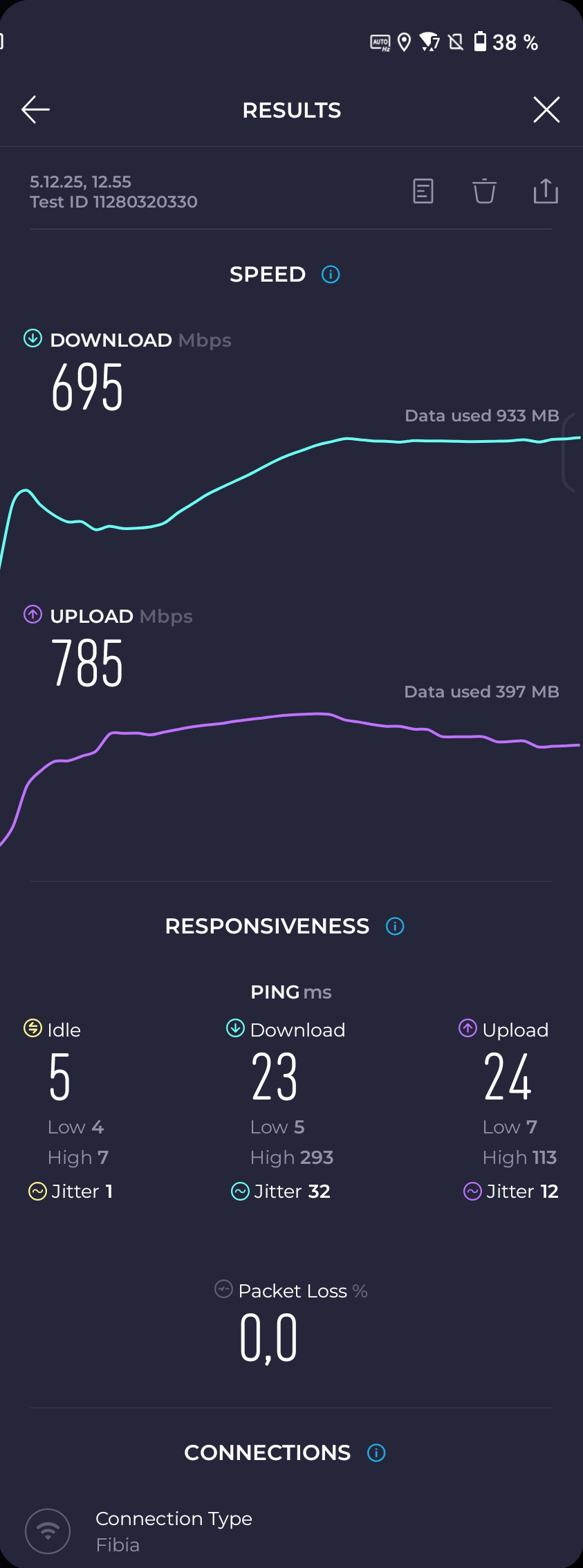
In the living room, an arm’s length from the router, the Archer BE450 pulled 695 Mbit/s out of the connection’s theoretical Gigabit. That’s a solid speed that places it nicely in the field, but is not in itself a sensation. My Google Nest WiFi Pro mesh system delivers just over 850 Mbit/s under the same conditions.
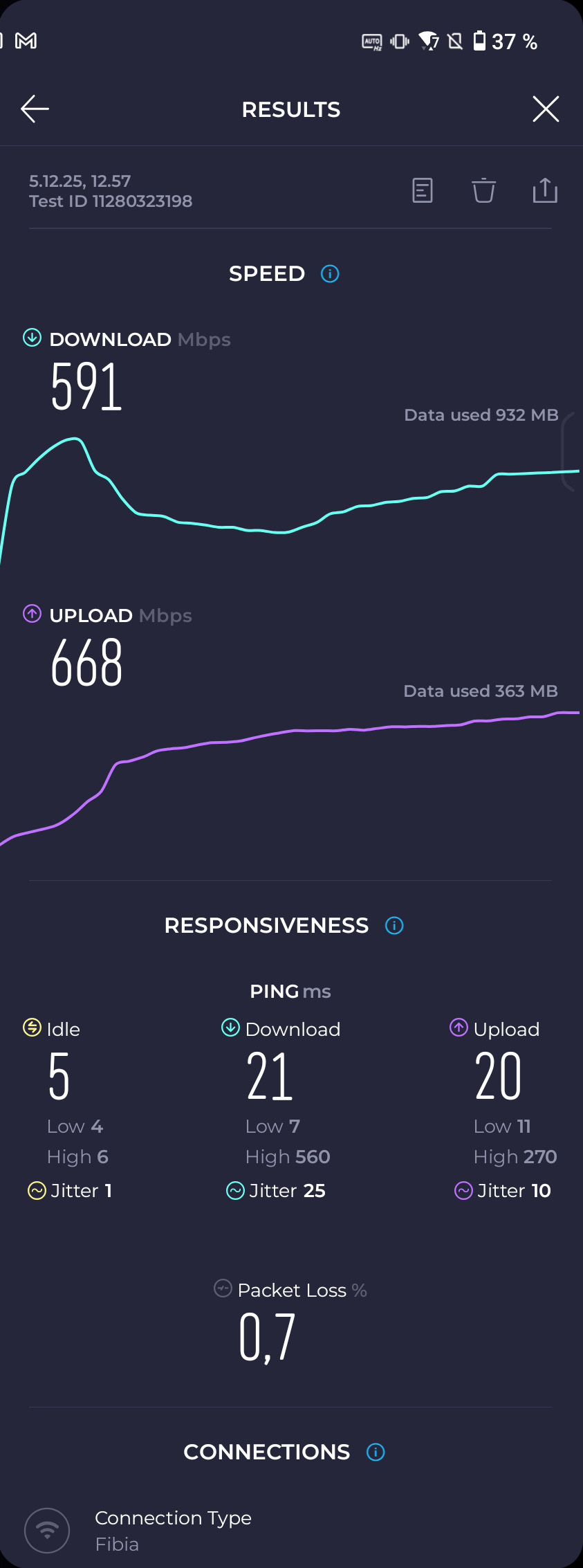
In the kitchen next to the living room, the speed remained at an impressive 591 Mbit/s. This suggests that the internal antennas are remarkably effective.
The real litmus test took place in the office, located at the end of a long corridor and several walls away. Here, the single TP-Link router delivered 281 Mbit/s.
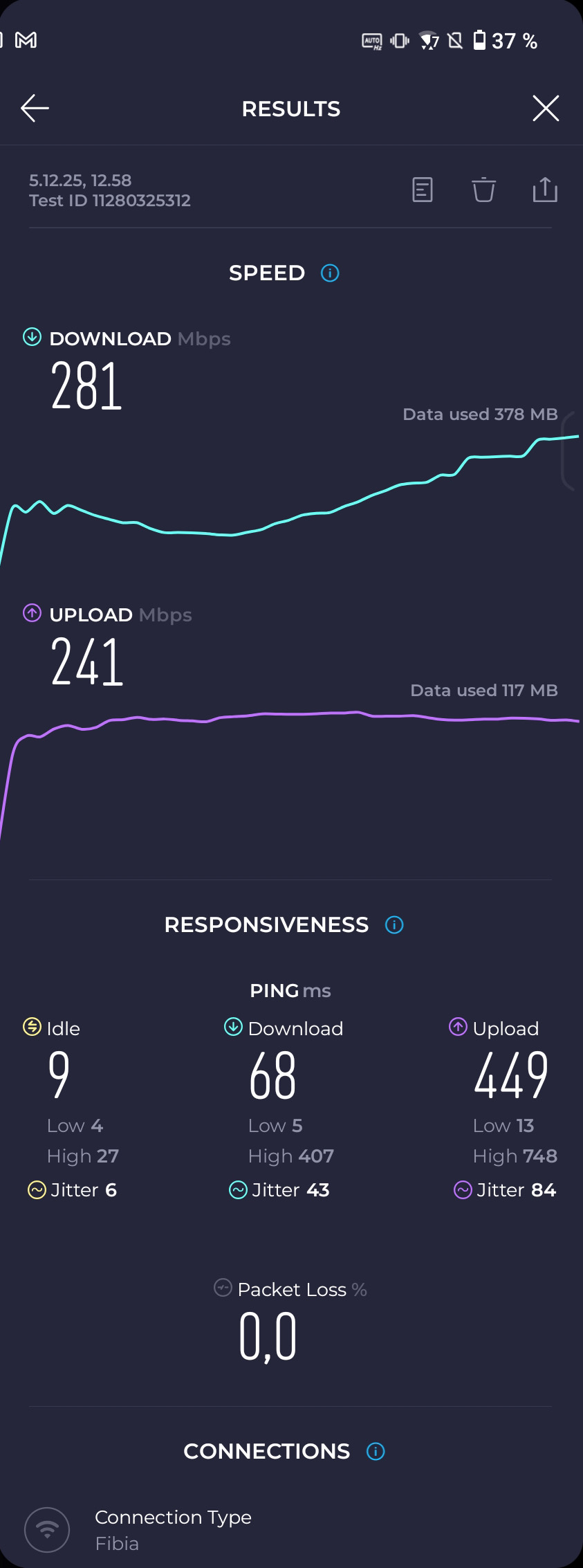
This figure becomes particularly noteworthy when put into perspective: it is approximately twice as fast as the aforementioned three-node mesh system that I typically use to cover the same area.
The fact that a single inexpensive router can outperform a mesh system with three nodes that is twice as expensive in such a difficult location puts the advantages of mesh systems into perspective. At least as long as the nodes are connected wirelessly to each other.
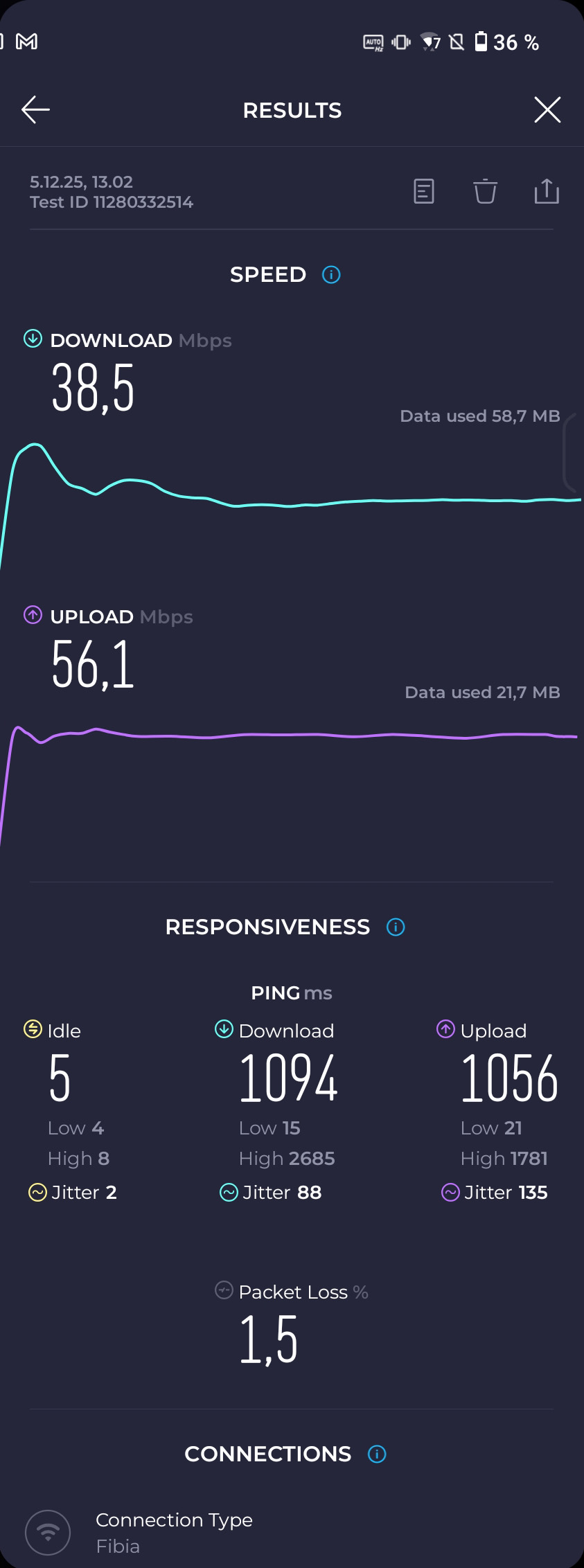
However, there is no such thing as a perfect solution. In the furthest corner of the flat, the signal ran out and the speed dropped to 38.5 Mbit/s. That’s still enough to stream Netflix in 4K, but it shows that if you live in a very large house or a ‘concrete bunker’, you may still need the EasyMesh feature to extend coverage with multiple devices.
The same will be true if there are many people in the household who all need to connect multiple devices to the network at the same time. The router can only handle streaming to four devices at a time. But for most apartment dwellers, this one box will be plenty.
Conclusion
The TP-Link Archer BE450 is a router that challenges price categories. The fact that you can get a 10 Gbit port and wireless speeds of over 7 Gbit in such an inexpensive device seems almost like a miscalculation on the part of the manufacturer.
The design is elegant and living room-friendly, which is a plus for those who do not live in a server room. The compromise is that the built-in antennas can only serve data to four devices at a time. More expensive routers can usually handle a higher number of devices, and they do so on the 6 GHz band, which the Archer BE450 does not support.
Despite this, the Archer BE450 seems like a bargain that delivers incredible performance for the money.

We think
Impressive specifications considering the price. 10 Gbit internet port. Discreet and family-friendly design. No 6 GHz band (but that can be forgiven for this price). Only one super-fast port, and it's used for the internet connection.
219 €
Specifications
- Processor: Quad-Core CPU
- Memory: (not stated)
- Speed: Up to 7.2 Gbit/s total (5,764 Mbit/s 5 GHz / 1,376 Mbit/s 2.4 GHz)
- Standards: Wi-Fi 7 (802. 11be/ax) 2.4 GHz / 5 GHz dual-band
- Antennas: 5 built-in (four simultaneous streams)
- Connections: 1 x 10 Gbit/s WAN/LAN, 1 x 2.5 Gbit/s WAN/LAN, 3 x 1 Gbit/s LAN, 1 x USB 3.0
- Features: MLO, 4K-QAM, Multi-RU, EasyMesh, VPN Client/Server, HomeShield
- Coverage: “A three-bedroom home”
- Colours: White
- Dimensions and weight (WxHxD): 200 × 176 × 59 mm / 619 g
- Web: tp-link.com
Benchmarks