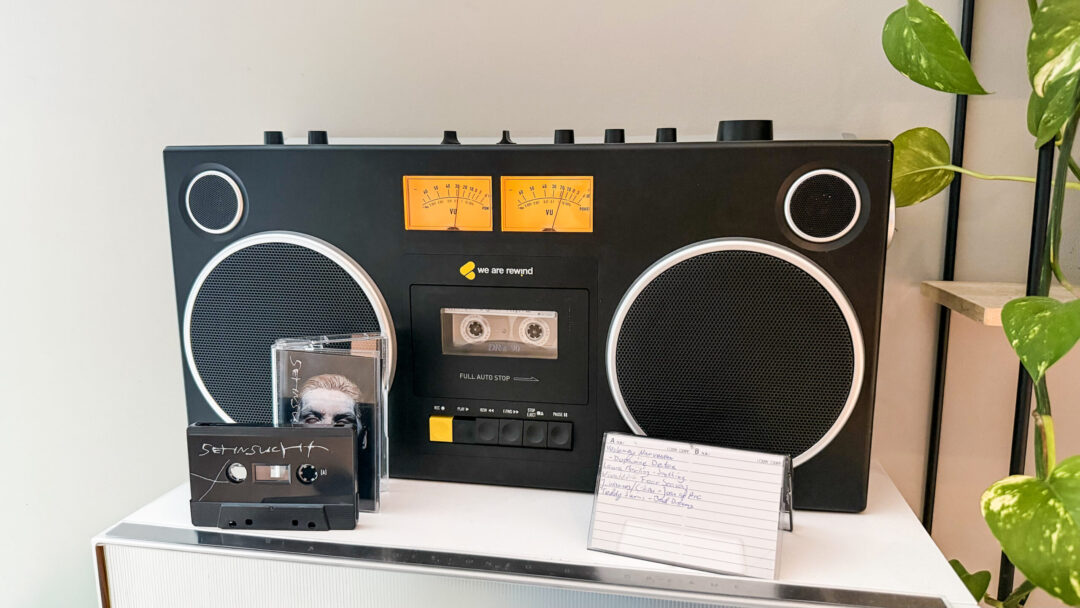

Cassette tapes are back. And no, it’s not just a few nostalgic 50-year-olds who have dug out their old Maxell cassette tapes from the basement. In the first quarter of 2025, sales of cassette tapes rose by a whopping 205 per cent in the United Kingdom, according to figures from the industry organisation BPI. In the US, sales have risen from 50,000 cassettes in 2014 to well over 430,000 in 2023 – and the trend continues upwards. We Are Rewind has recognised this, and their answer is Blaster. Before its launch, it was called Boombox GB-001. Everyone agrees that Blaster is cooler. Initially, it will be available in anthracite, which the manufacturer has nicknamed Curtis – presumably after Curtis Mayfield. If other colour combinations are added later, they will be given other nicknames.
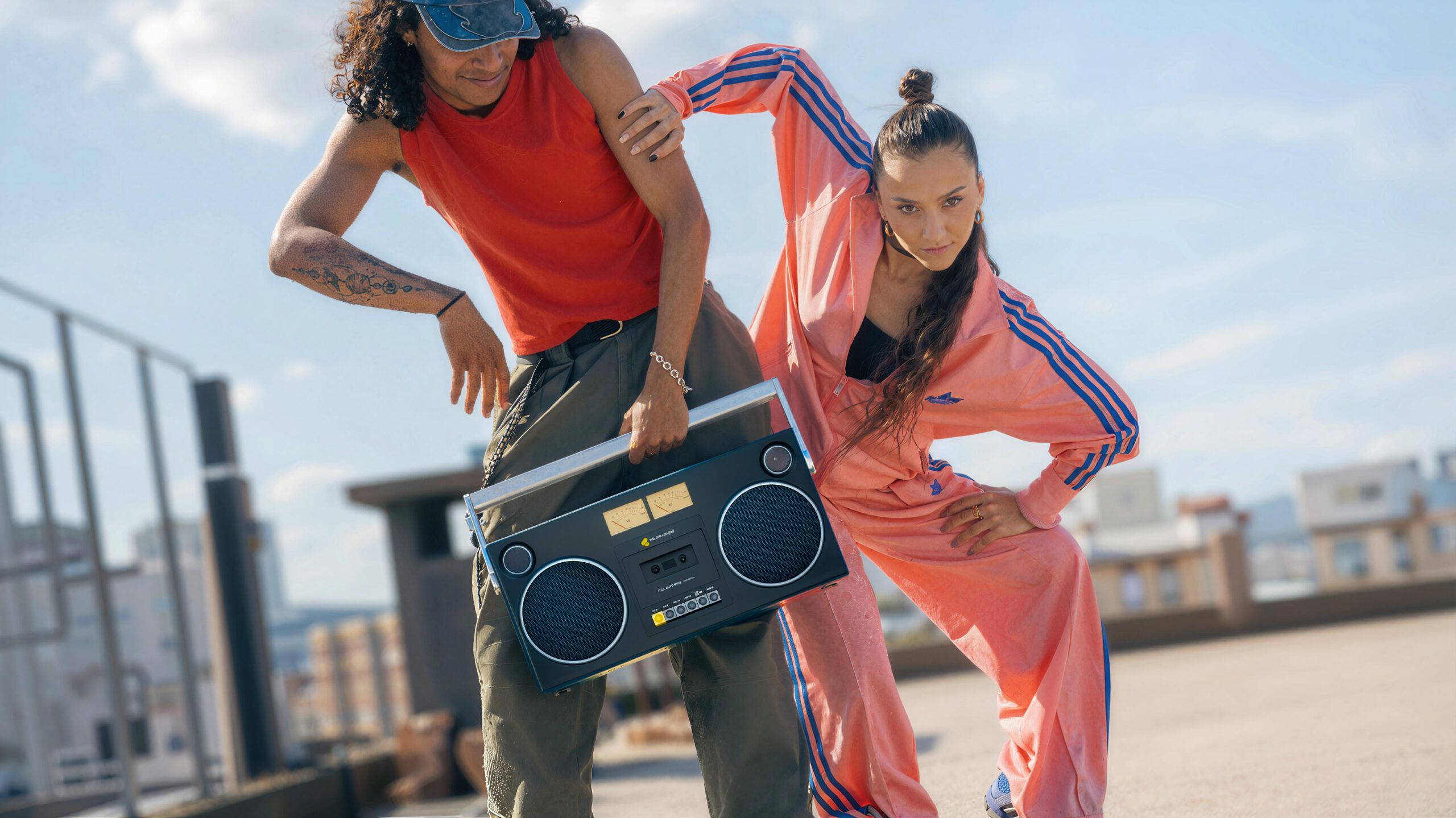
If you’re wondering who primarily buys cassette tapes today, you might be surprised to learn that it’s young adults between the ages of 18 and 24. They regularly listen to music on physical formats, and cassette tapes have become Generation Z’s new collector’s item. Taylor Swift, Billie Eilish, Kendrick Lamar and Ariana Grande all release their music on cassette tape. The selection is also growing in hip hop and metal. K-pop groups are selling cassette tapes like hotcakes. And on TikTok, hashtags such as #cassettetok and #mixtape have made the format an aesthetic thing on par with vintage Polaroid and film cameras. gjort formatet til en æstetisk ting på linje med vintage Polaroid- og filmkameraer.
Back at home, cassette tapes can be found in any self-respecting music store. The selection ranges from Sleaford Mods and Megadeth to cult electronica names. The format is alive and well, and it sells.
This suddenly makes it relevant to test a cassette player in 2026. It is therefore fitting that We Are Rewind has recently launched its Blaster – a portable boombox with a cassette player and Bluetooth speaker. The question is whether it can give your cassettes a sound quality that is worth listening to.
Brushed aluminium and tactile enjoyment
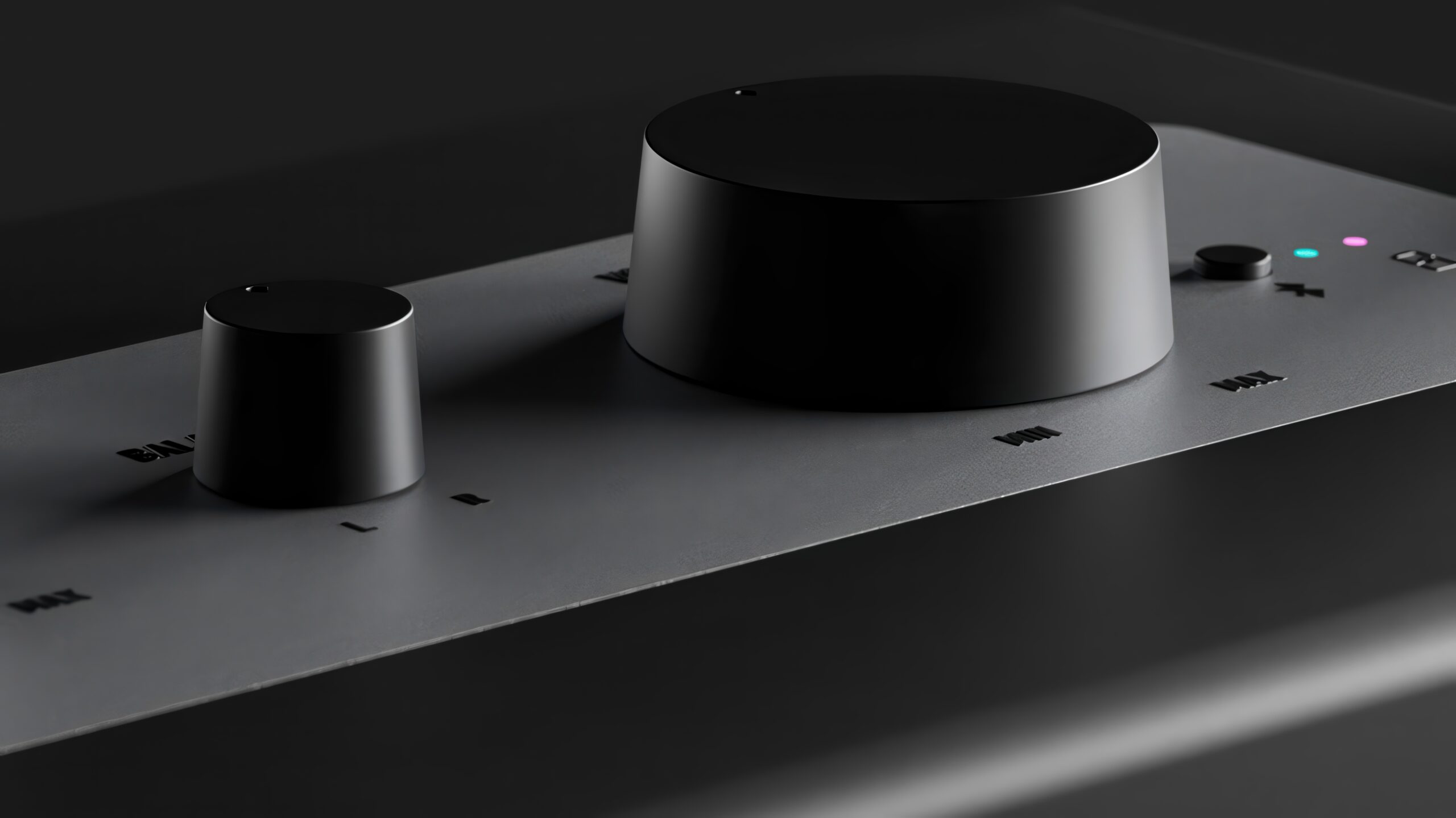
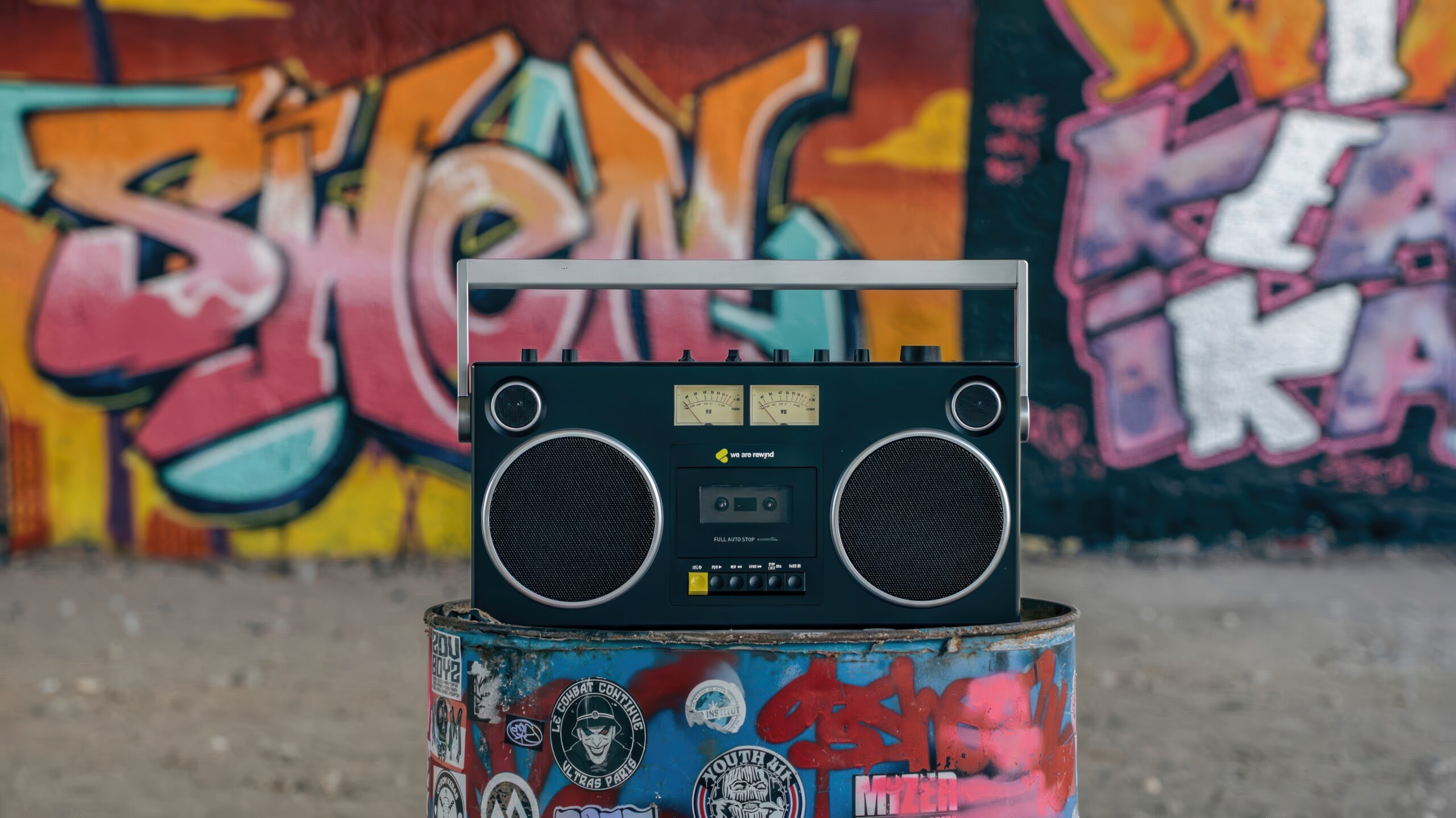
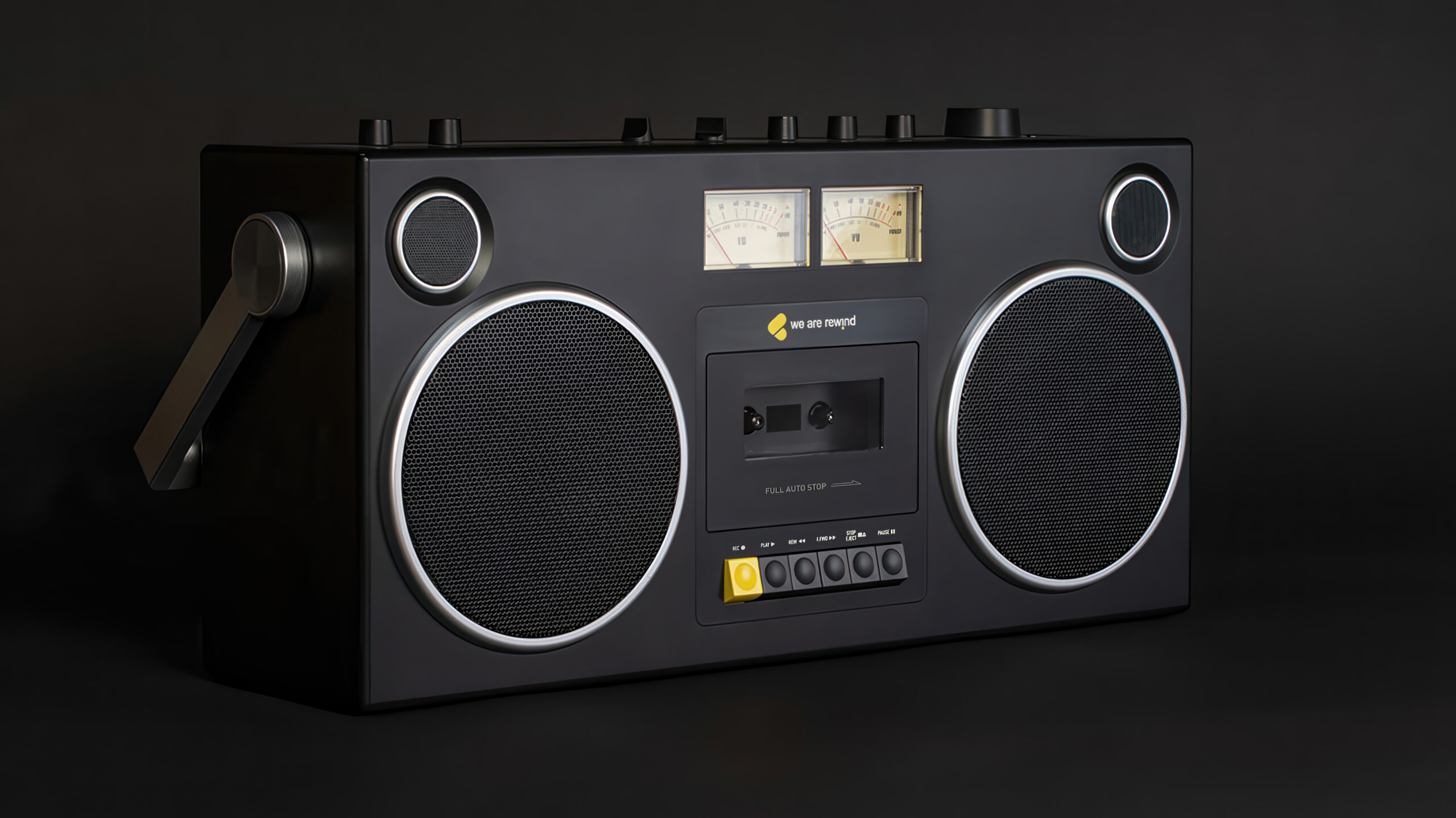
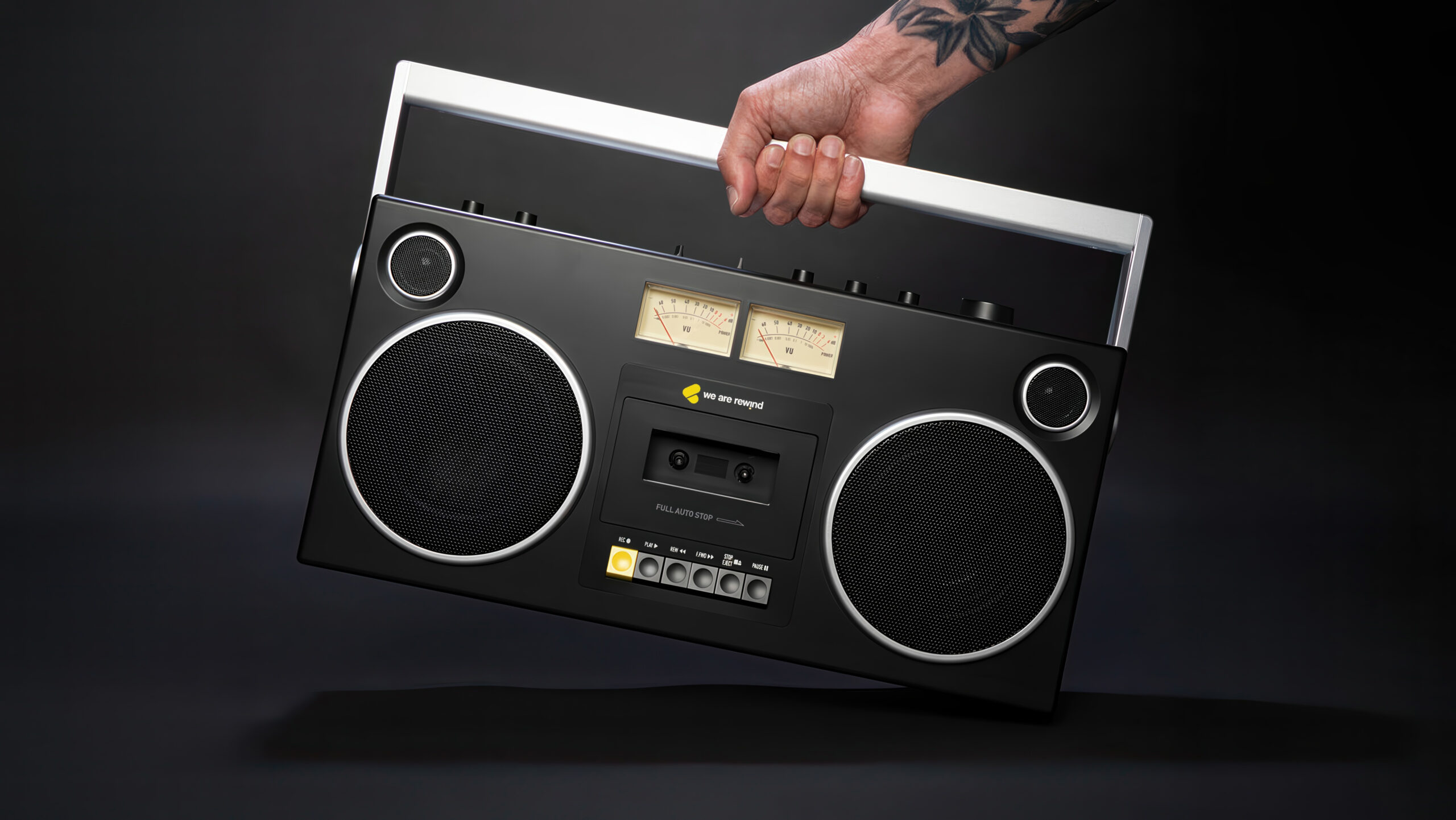
The design is undoubtedly retro, but with a minimalist twist that avoids being cartoonish. Brushed aluminium, a fold-down carrying handle and physical buttons for bass, treble, balance and volume provide a tactile experience that no app can match. The cassette door opens from the front with a mechanical click that takes me right back to my childhood bedroom in the 90s. Nothing here is left to digital cosmetics – everything you need to operate it is right on the player.
The portable cassette player is back. But is it still alive? Join us for a test of the We Are Rewind Cassette Player.
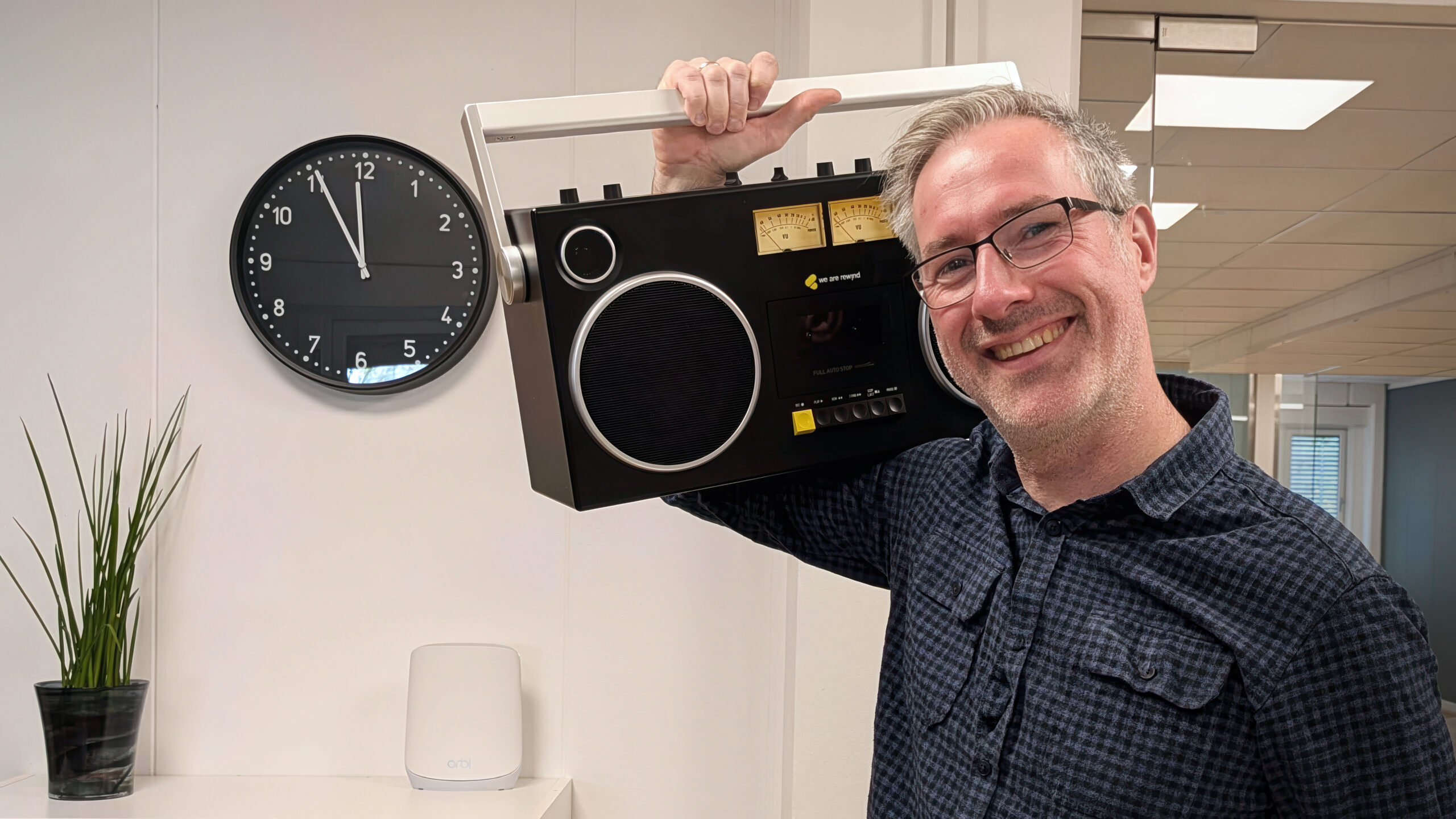
Weighing in at nearly seven kilos, it’s not exactly light. The weight helps reduce vibrations and provides a stable platform for the cassette mechanism. For example, wow and flutter are rated at a low 0.15 per cent, which is impressive for a portable player. The Blaster is large enough to dominate a table, yet compact enough to take to the park.
The cassettes play the leading role
The cassette compartment is the heart of the Curtis. The mechanism is probably based on a modern CSG-type Tanashin clone; I don’t think there is anything else out there. But they have clearly put a lot of effort into it. Among other things, you can adjust the motor speed with a screw on the back, which is rare for a portable player.
The player also has separate options for Type I and Type II cassettes. The switch that selects between the two types changes the way the player processes the audio signal, both during playback and recording, so that the electronics match the chemistry of the tape. If you select a Type II cassette in Type I mode, it sounds too sharp and thin; conversely, it becomes dull and unclear. At least in theory, although I must admit that I didn’t hear much difference with my vintage Type II tapes from Maxell and Fuji.
The active AC erase head is perhaps the most important technical detail. Cheaper players often use a permanent magnet as the erase head, resulting in a higher noise floor and often incomplete erasure. Here, a high-frequency alternating current is used to completely demagnetise the tape, resulting in lower background noise when making new recordings.
Recording: A bit of a shot in the dark
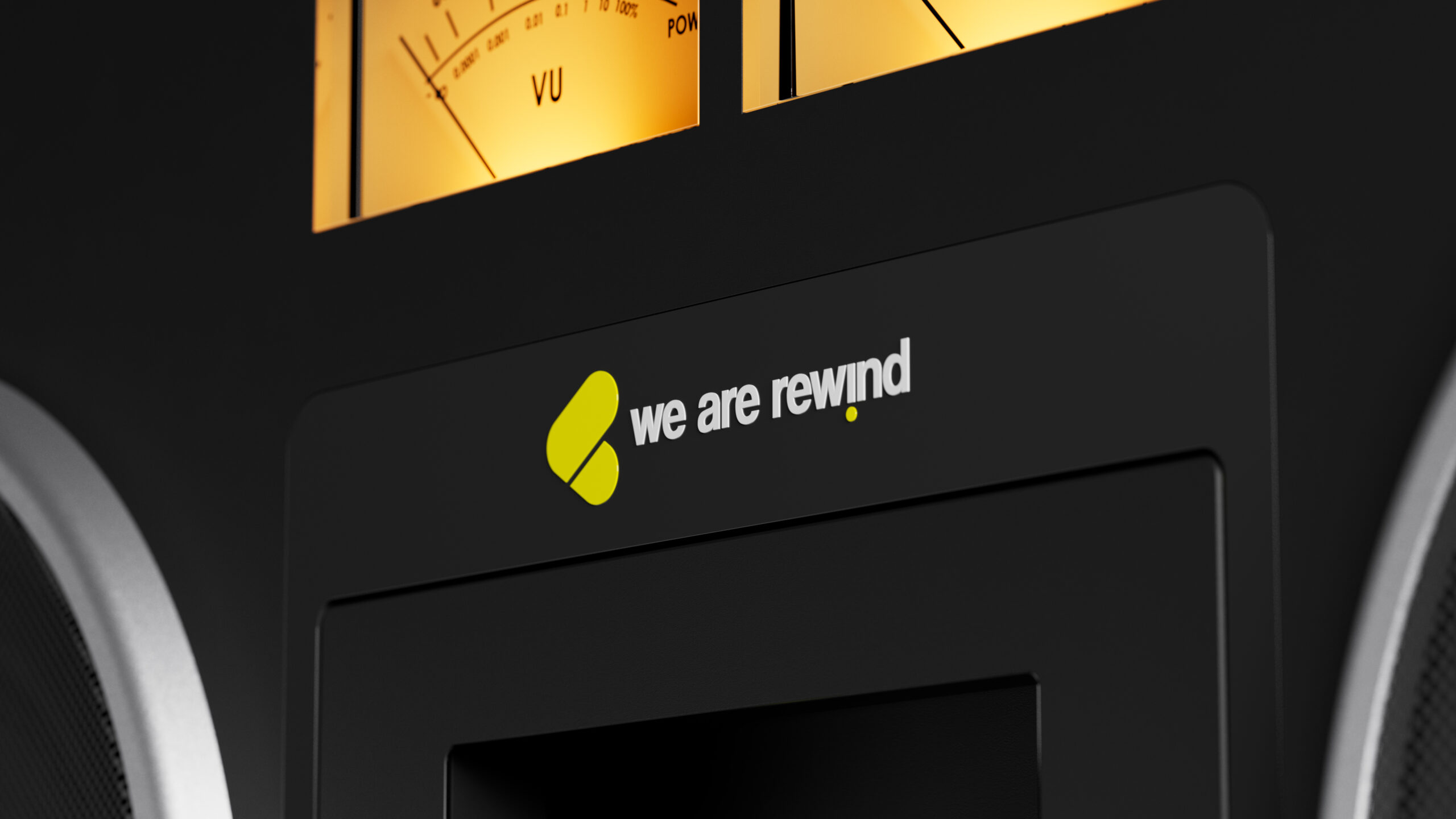
The recording level can be adjusted manually via a separate knob on top. It works independently of the main volume, which is handy. Type II can handle a stronger signal than Type I before it starts to distort. However, be aware that the VU meters show the level from the audio source, not what actually hits the tape. As this is a two-head machine – a combined record/play head plus an erase head – you cannot monitor the recording in real time. You record, rewind and listen afterwards. A bit like taking pictures with a Polaroid camera.
The results with my older recording cassettes are surprisingly good. Even at high recording levels, I hear no noticeable distortion, as the player has a built-in limiter that prevents overdrive. Recordings made with the Blaster are obviously not on par with my own stationary Nakamichi 1000 II – wow and flutter are more audible, especially on piano chords where the pitch fluctuates slightly. But for what it’s intended for – making mix tapes and recording from Bluetooth or AUX – it works fine.
I tried switching between Type I and Type II in the middle of a recording to see if the sound changed character. I don’t think it does. The difference between the tape types is more audible in tape noise and treble resolution than in the immediate timbre. My old unused Type II cassettes from the 90s provide audibly better sound quality than the Type I tapes you can buy today – cleaner, more dynamic and with more energy in the treble.
Bluetooth: Powerful, but somewhat limited
When connected via Bluetooth or AUX cable, the Curtis impresses with its sheer power. It plays loudly and without distortion, and the bass is dry and controlled. The vocals do not clash with the bass register; they sound clear throughout the low register. However, there is a lack of air in the treble. Compared to, for example, a JBL Authentics 300, the soundstage feels a little limited, and the stereo effect is less pronounced than one might expect from a device with dedicated right and left speaker units.
Cassette: Surprisingly different
When I switch from Bluetooth to cassette, something unexpected happens. The treble opens up significantly. Suddenly, the balance is better, and it sounds more precise in the high register. It becomes clear to me that the EQ curve has been fine-tuned for cassette playback, which makes sense historically – but it also means that the Bluetooth source and AUX input do not get the same benefits.
We Are Rewind could have worked more on adapting the EQ to each source, but that would require a digital signal processor (DSP), which I understand is not desirable in a product like this. You can adjust the bass and treble controls, but if you turn up the treble for Bluetooth, you have to turn it down again for cassette. A minor annoyance in everyday use.
Rammstein’s Sehnsucht on the original cassette sounds fantastic with the Blaster. The vocals are a little thinner than I’m used to, but the drums hit hard and it sounds catchy. If you play it loud enough, you’ll quickly become the king of the local park with this.
Veslemøy Narvesen’s Dopamine Detox, played on the boombox from Bluetooth, reveals a little wow and flutter on the wind instruments and glockenspiel, but the vocals are clear and the bass guitar is distinct. I have no problem sitting down and listening to the entire recording. And for the record: if you record music via Bluetooth or the wired AUX to cassette and play it back, it sounds just as balanced and open in the treble as with other cassettes. In some ways, it sounds better to play the recording than to listen to the original source. You just have to live with a little noise, poorer dynamics and slight variations in speed and tone.
The hiss: the downside of analogue
It’s worth mentioning that even without a tape in the machine, the analogue amplifier circuit and the sensitive playback head are activated when you press play and pause at the same time. This can be heard as a constant hiss through the speakers. Via Bluetooth, the boombox is completely silent. This means that no matter how good and quiet the recording is, you will hear the hiss during playback.
With a good recording or a pre-recorded cassette, this is perfectly acceptable – the intensity of the hiss varies with the quality of the recording. Recordings made with the boombox itself have a slightly more audible wow and flutter, as this occurs during both recording and playback. And no, since this is analogue, you can never get the two to match each other and thus cancel each other out. It would be a fun technical exercise, but physics does not allow it.
Battery and power
The 14.8 V, 3,000 mAh battery powers the Blaster for up to 10-15 hours, depending on the source and volume. Environmentalists should know that the battery is replaceable, so the player can last for many years, even after the original cells have worn out.
The included 18 V power supply gives the amplifier stages a little extra headroom compared to battery operation. In practice, I notice no difference in volume, but at very high levels, power operation can provide slightly cleaner bass transitions. Will you notice this in everyday use? Probably not.
Mixtape nostalgia
On the contrary, I sit and enjoy the charm of listening to cassette tapes again. It’s the experience of making my own mixtape and being forced to listen to the songs in their entirety while I record. I dream myself back to the 90s, when my friends and I borrowed each other’s mixtapes, discovered new music without algorithms and had to ask each other who the artist was in the middle of the B-side of ‘Mixtape 3 from Spain’. And then, as always, you have to remember to rewind the tape when you’re done with it before lending it to the next person.
Purists on the Boomboxery forum will point out that the Blaster lacks a radio and therefore cannot strictly be considered a true boombox. In my opinion, the Bluetooth connection is a more than worthy replacement in 2026. You have access to all the music in the world via your phone, and the AUX input allows you to connect a turntable if you wish.
Conclusion
Currently available in the almost black Curtis colour variant, the We Are Rewind Blaster is a well-designed boombox that takes the cassette format seriously. The build quality is first-class, with brushed aluminium and a solid construction that can withstand being taken outdoors and also looks good in a modern home. The four speakers deliver powerful sound, but the Bluetooth source lacks a little air in the treble. Ironically, the cassette sounds more balanced. We just have to live with the fact that the EQ is not specifically tailored to each source.
The recording function works surprisingly well for a portable device, but cannot compete with serious stationary alternatives. On the other hand, you get a replaceable battery, support for Type I and Type II cassettes, and a retro experience reminiscent of a time when music was something you held in your hand with a handle. For those who miss the mixtape era, this should be high on your list.