


I’ve carried many speakers up stairs over the years, but this was something completely different. The first box from Arendal Sound was so heavy that I had to pause halfway up. When I realised there was only one speaker in the box and there was another one below, I could have laughed – if it wasn’t for the sudden pain in my back.
It soon became apparent that these are only “bookshelf speakers” on paper. At over 55cm high, almost 30cm wide and 37cm deep, the 1528 Bookshelf 8 doesn’t fit on any bookshelf I know. And at 30kg each – yes, you read that right – it’s one of the heaviest and most solid bookshelf speakers I’ve ever come across. This is some serious engineering from Norway. Although they are manufactured in China, both development and quality control take place in Norway.
HDF and expensive solutions
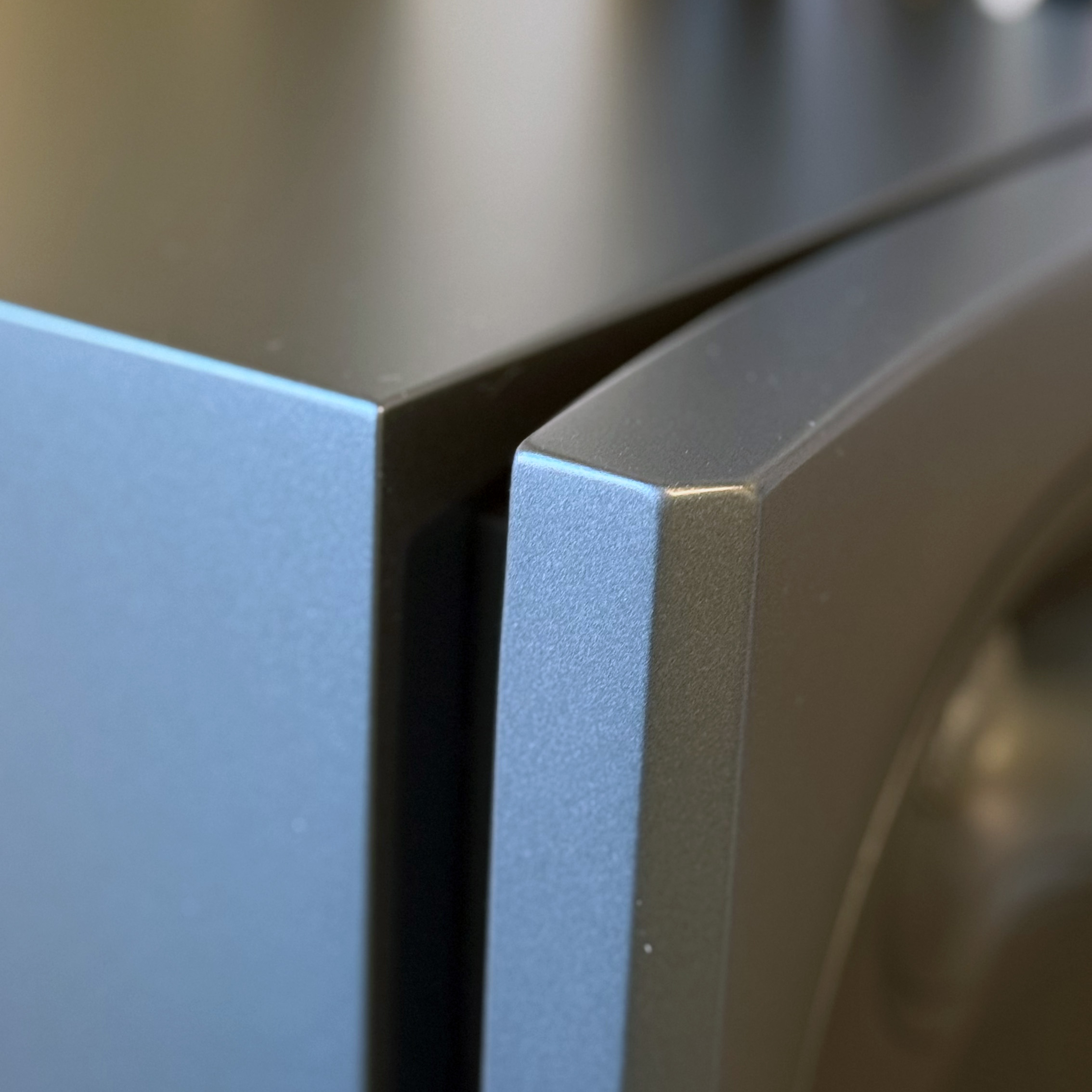
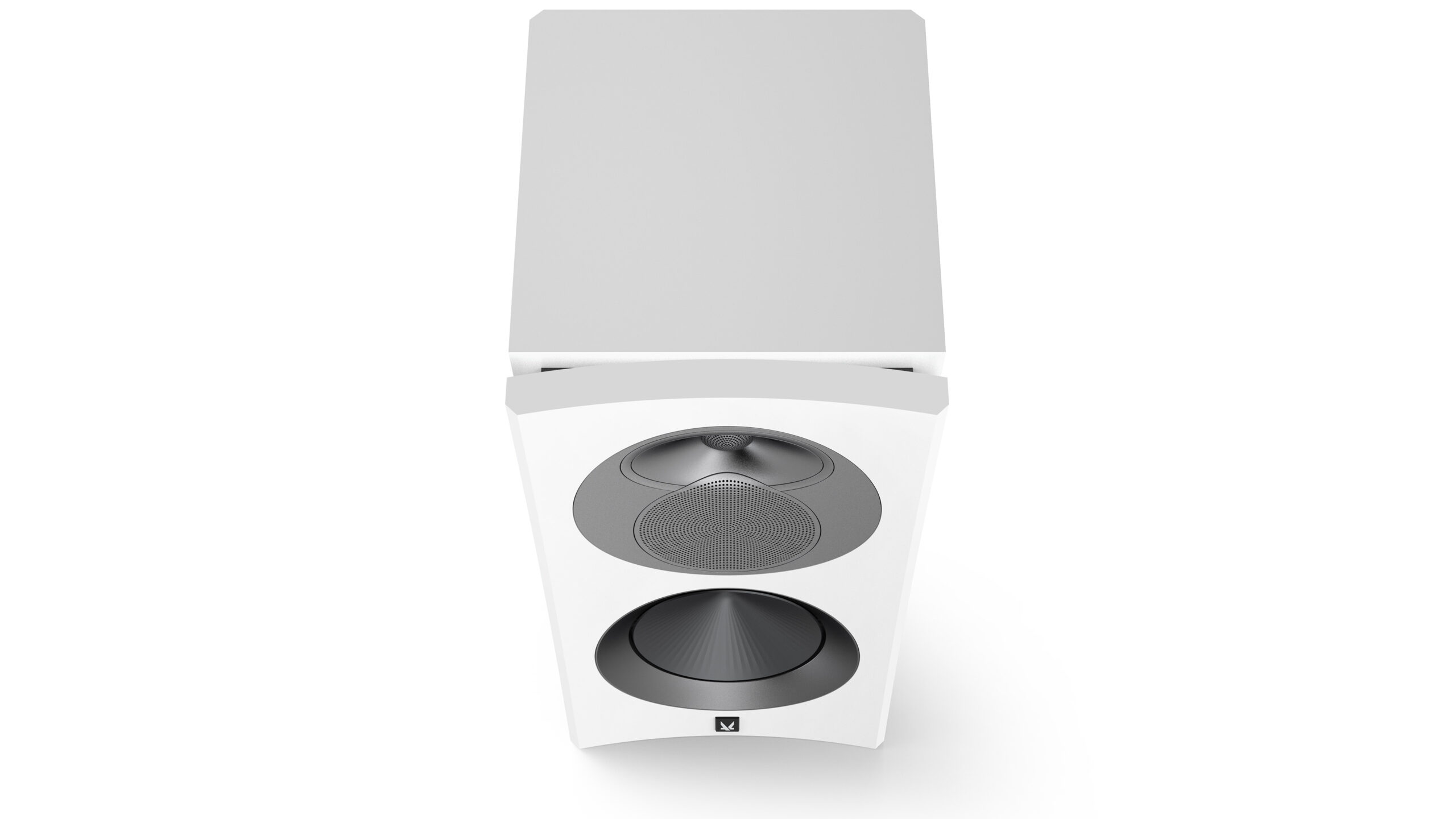
The enclosures are constructed with extreme attention to detail. The front panel is 8 cm thick and consists of several layers of HDF pressed together under enormous pressure. It is also curved to minimise diffraction and is mounted on a middle plate that separates it from the rest of the cabinet. This eliminates unwanted resonances.
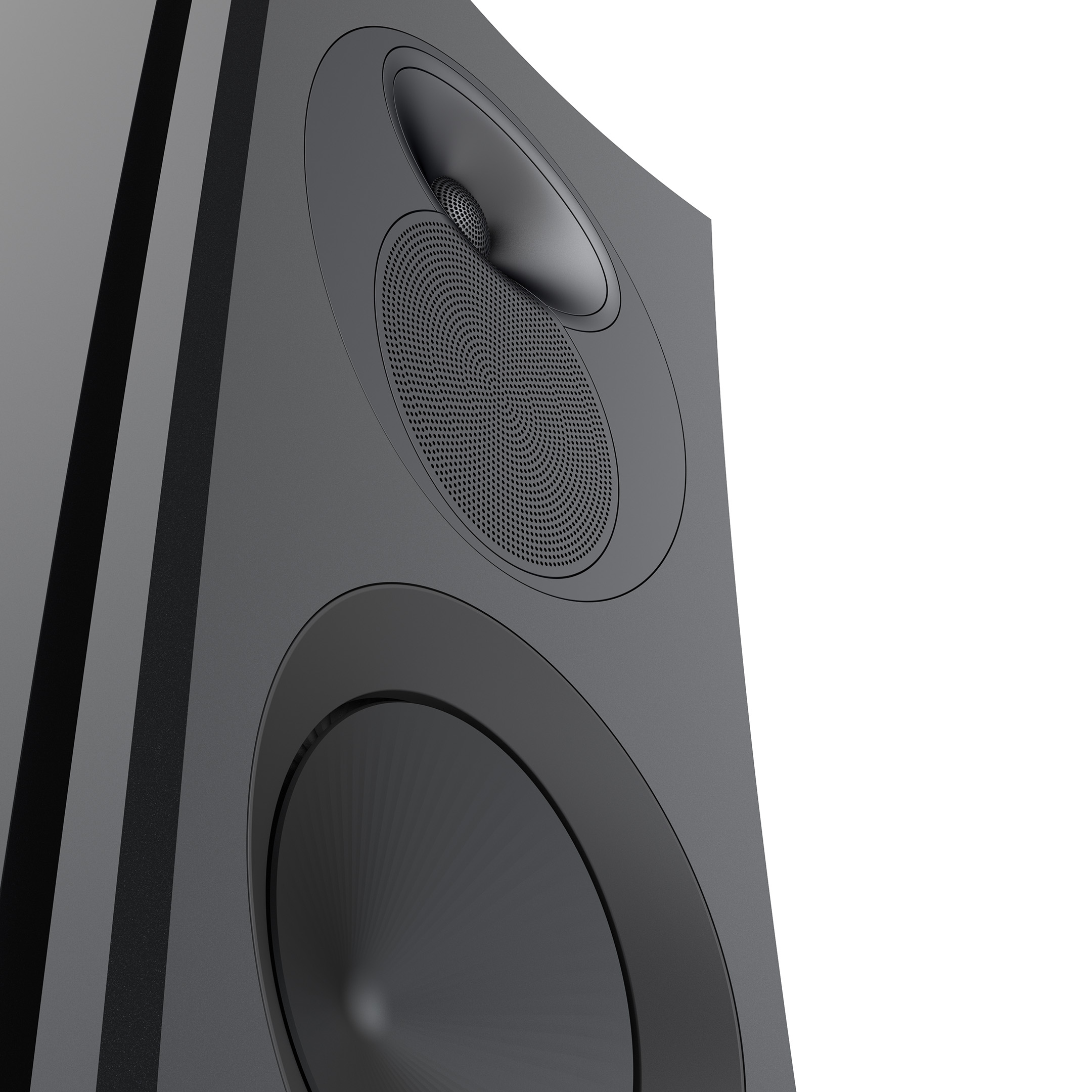
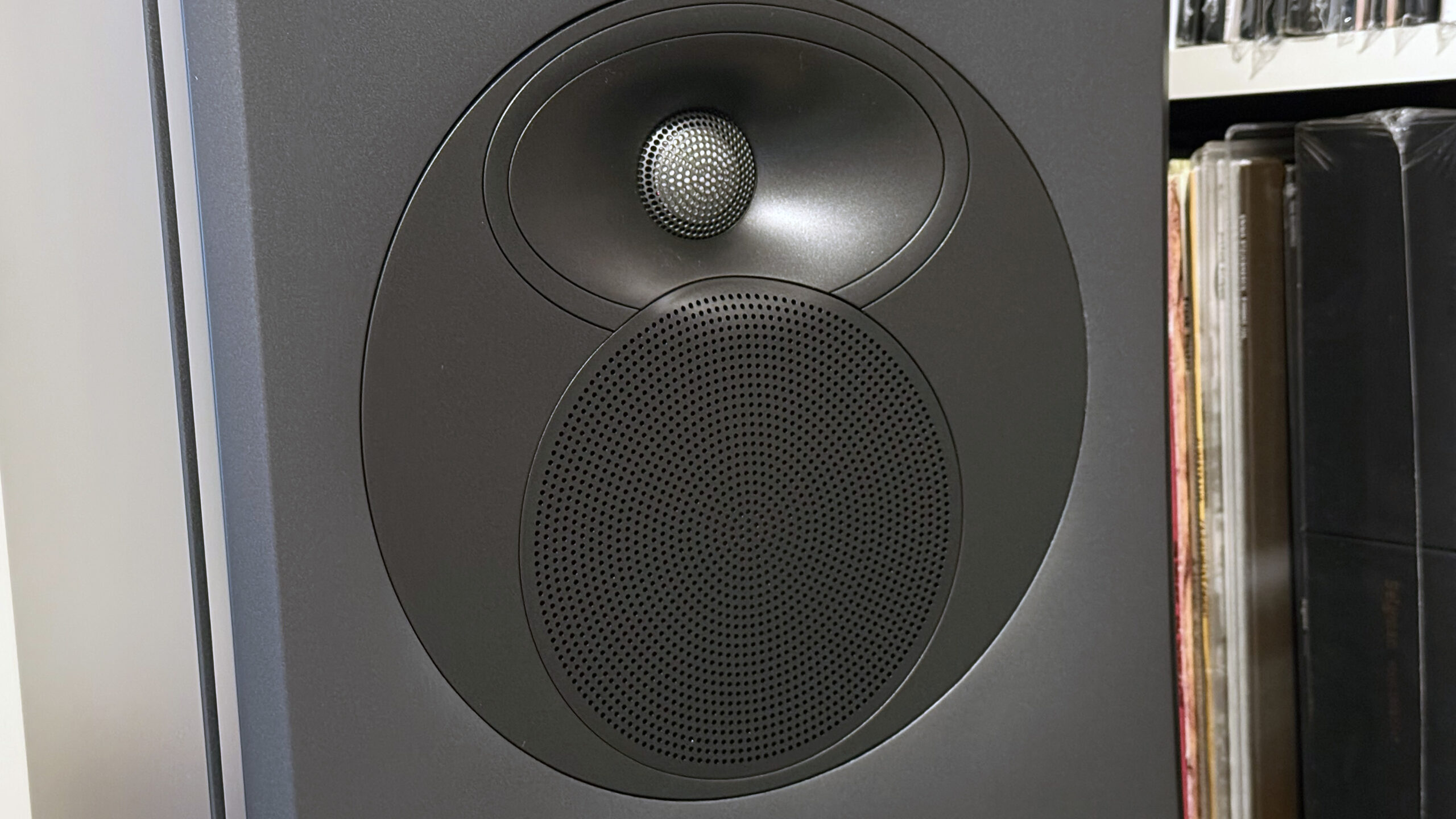
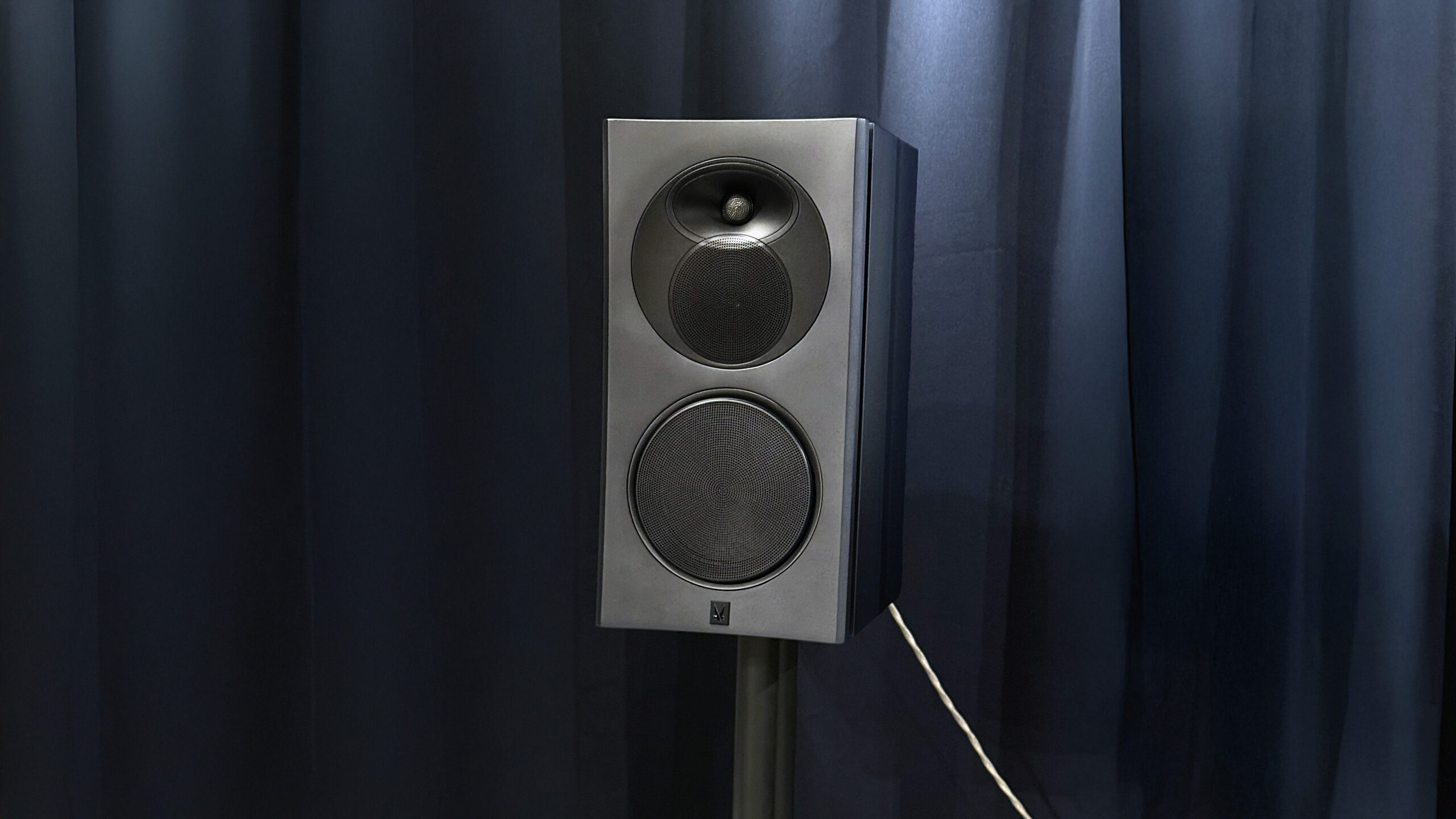
An 8-inch woofer with an aluminium cone dominates the front. Above it sits a 5-inch carbon and graphene midrange driver, while a 28 mm lithium-magnesium dome tweeter sits on top. The tweeter is mounted in a specially designed wave guide that controls dispersion. The top grill of the midrange unit curves inwards into the wave guide – a solution that is far more expensive than placing the midrange unit further down. The entire speaker design is characterised by a consistent focus on minimising distortion and optimising phase response.
Behind the drivers is a high-end crossover with high-quality components. While many others use iron cores in their coils, Arendal Sound has chosen air coils without iron cores. This reduces distortion and improves the sound, but is more expensive to produce. Together with carefully selected polypropylene capacitors, these are components you normally only see in significantly more expensive speakers.
Powerful as a polar bear, clean as a glacier
On the test bench is the trusty Hegel H590, a powerful 301-watt, 8-ohm amplifier that is rarely pushed to its limits. But here the case turns out to be quite different. With these speakers, the volume knob has to be turned much further to the right than I’m used to.
It pays off. Maria Noreger’s Shy demonstrates the speakers’ ability to create a precise soundstage. The bass drum is tight and crisp, and the synth bass has plenty of body and substance. At the same time, the midrange is open and airy – Noreger’s voice has an in-your-face presentation that I haven’t heard in a long time.
But the bass doesn’t just hit hard. It’s also extremely well defined and controlled. The double bass on Dieter Ilg and trumpeter Till Brönner’s Cohen cover A Thousand Kisses Deep is so full of sound and facets that I have to pinch myself.
Tolerably deep, extremely energetic
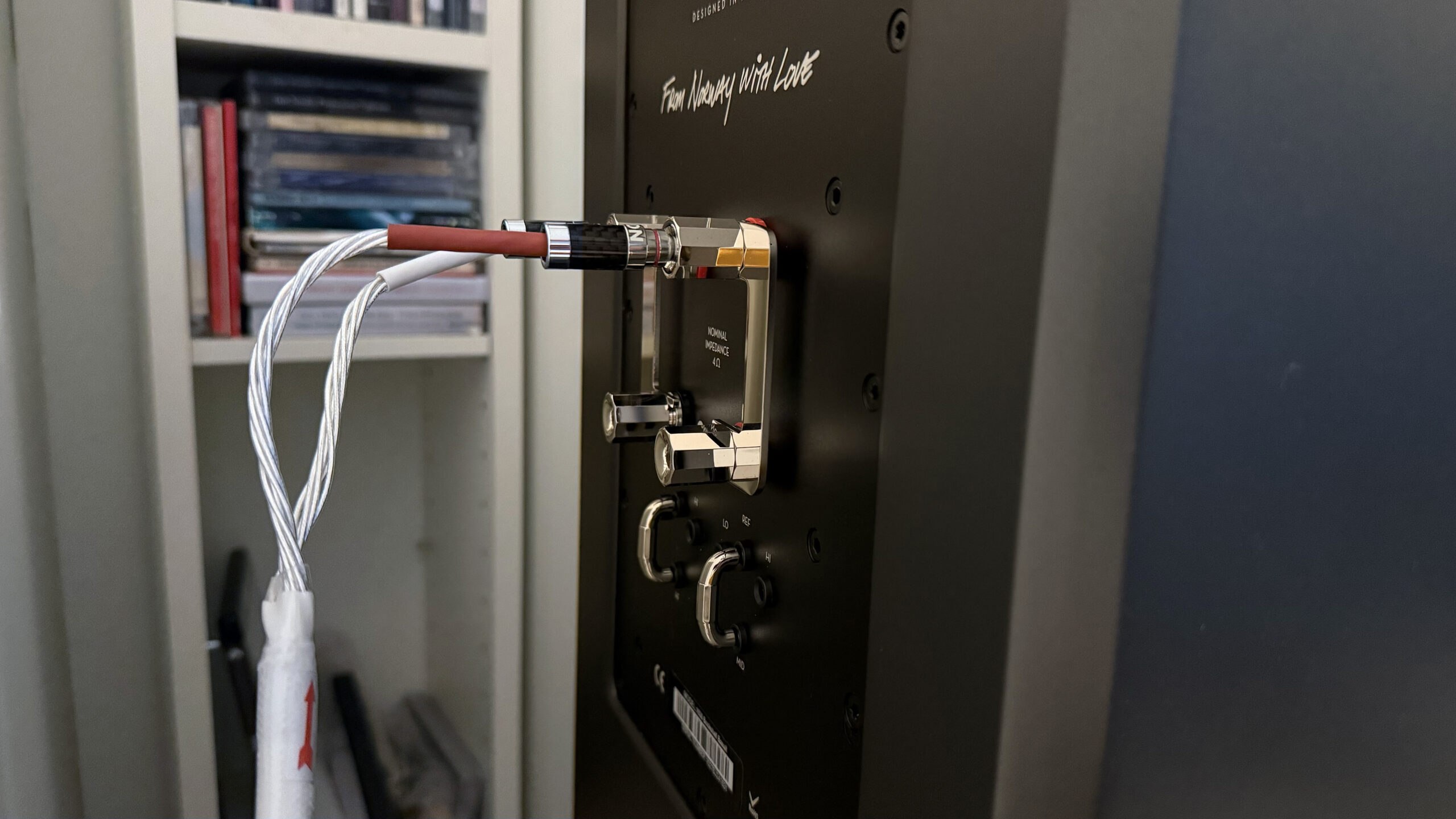
The speakers play linearly down to around 40 Hz (-3 dB), which is very impressive for a so-called compact or bookshelf speaker. If you’re going to have these speakers, you might as well set aside €1,200 for a set of solid stands right away. Regular stands will just be too flimsy.
The big, energetic – and extremely linear – bass really comes into its own with organ and electronic music. It’s so powerful and precise that it almost knocks me off my feet. The speakers don’t go as deep as large floorstanding speakers, but that can also be an advantage. They’re much easier to make work in the room they’re in. You can easily place them close to the back wall, and in case of problems, they come with foam plugs for the bass ports so you can dampen unwanted standing waves.
But as good as the bass is, it’s the midrange that impresses me the most. Brass instruments and percussion are reproduced with both detail and power. While many other hi-fi speakers attenuate slightly around 3 kHz for a rounder, more relaxed sound, the 1528 Bookshelf 8 retains all the energy – adding an extra dimension of realism to live recordings. They’re similar in sound to PA speakers, but play far, far cleaner.
Requires power
The 1528 Bookshelf 8 has a sensitivity of only 84 dB, which means they require quite a few watts to come to life. I mentioned earlier that the Hegel H590 needed to be turned up higher than I normally do. My own integrated AVI S21 MI (Laboratory Series) with 175 watts per channel is just enough to drive them, but to really hear what they can do, even more power is required. The Hegel H590 with its 301 watts brings out all the dynamics, but an H400 will also do the job just fine.
If we’re talking about amplifiers in more affordable price ranges, I’d highlight the NAD C399, which with 180 watts per channel matches the speakers in both price and power. The Musical Fidelity M6si with its 220 watts is another good option.
The Rotel RAS-5000 or RA-1592 MKII will also deliver, and the Hegel H190 with 150 watts is a solid choice in a slightly more expensive price range.
1528 Bookshelf 8 versus the competition
In this price range, Arendal Sound faces strong competition. Or do they? The Bowers & Wilkins 705 S3 Signature is in the same price range but is outclassed in power and control, and Arendal Sound sounds just as homogeneous – maybe even more so. The Raidho X1t sounds amazing, with an x-factor that’s hard to describe. Arendal Sound, on the other hand, just keeps on going and takes all music in its stride. Everything sounds insanely good, with no obvious weaknesses. It feels like there’s no competition here at all.
The Bowers & Wilkins 805 D4 is more than twice the price of the Bookshelf 8. Had they cost the same, I’m not sure I’d choose the 805s – if it were my own money. Maybe only if I couldn’t find room for the huge Bookshelf 8.
Designed for surround sound
There is perhaps one drawback to the speakers, if it can even be called that. The tweeter with its waveguide has limited dispersion. This means that the stereo soundstage doesn’t have the depth towards the horizon that some other speakers can create. Here, the soundstage is flatter.
There’s a reason for this. Arendal Sound has always had home cinema in mind when developing speakers. The carefully controlled dispersion is not coincidence, but essential when you have many speakers in the same room. With 7, 9 or even 11 speakers around you, uncontrolled dispersion can lead to interference and uneven sound. With controlled dispersion, on the other hand, you can strategically place the speakers and achieve a seamless, holographic soundstage.
But be aware that a standard surround receiver doesn’t have the necessary power for these speakers. Even if a receiver indicates 150 watts per channel, this is often measured with only two channels active – and still weaker than an equivalent stereo amplifier. To get the best out of a 1528 system, you should invest in separate power amplifiers, at least for the front and centre speakers. Only then will you have the power and control needed to take film sound to new heights.
And if you’re wondering just how good a film sound you’re getting, I can mention our own THX-certified Procella P6. They are equipped with a horn tweeter, but rely on a powerful subwoofer for optimal performance. They are optimised for a crossover frequency of 80 Hz. But even then, the Arendal speakers will blow them away. This is simply an insane amount of power, control and great sound for the money.
Conclusion
The Arendal Sound 1528 Bookshelf 8 is one of the most impressive speakers this journalist has heard in its price range, Norwegian or not. They combine extreme build quality with an open, dynamic and engaging sound that makes you forget you’re listening to speakers.
The price is significant, but considering the performance and extreme build quality, it appears very competitive. It sounds like a cliché, but these speakers can actually compete with products twice their price.
The biggest challenge, besides space, is finding an amplifier that can drive them properly while being priced reasonably enough to match the speakers. Ideally, it should have at least 150 watts. But once you have the electronics in place, you’ll have speakers that will give you true music enjoyment for years to come.

We think
Extreme build quality and finish. Tight, precise and dynamic sound. Impressive bass reproduction. Great midrange. Requires significant amplifier power. Large and heavy, and need corresponding stands.
4500 €
Specifications
- Type: 3-way bass reflex
- Woofer: 8″ aluminium
- Midrange: 5″ carbon graphene
- Tweeter: 28 mm lithium-magnesium dome
- Sensitivity: 84 dB (2.83V/1m)
- Impedance: 4 Ohms
- Frequency range: 42-22,000 Hz (-3dB)
- Max power handling: 500 W
- Dimensions: 55.5 x 29 x 36.8 cm (HxWxD)
- Weight: 30 kg
- Web: arendalsound.com