

Nothing has decided not to launch a Phone (4) this year. Instead, the British firm has channelled its flagship ambitions into the mid-range and equipped the Phone (4a) Pro with a periscope telephoto camera, Glyph Matrix and a 5,000-nit display – all taken directly from the far more expensive flagship Phone (3).
It’s all wrapped up in a new metal unibody design that’s sleeker than anything Nothing has produced before. And all for under €600 for the model with 12GB of RAM and 256GB of storage. The 8/128GB model is even cheaper!
Design and construction
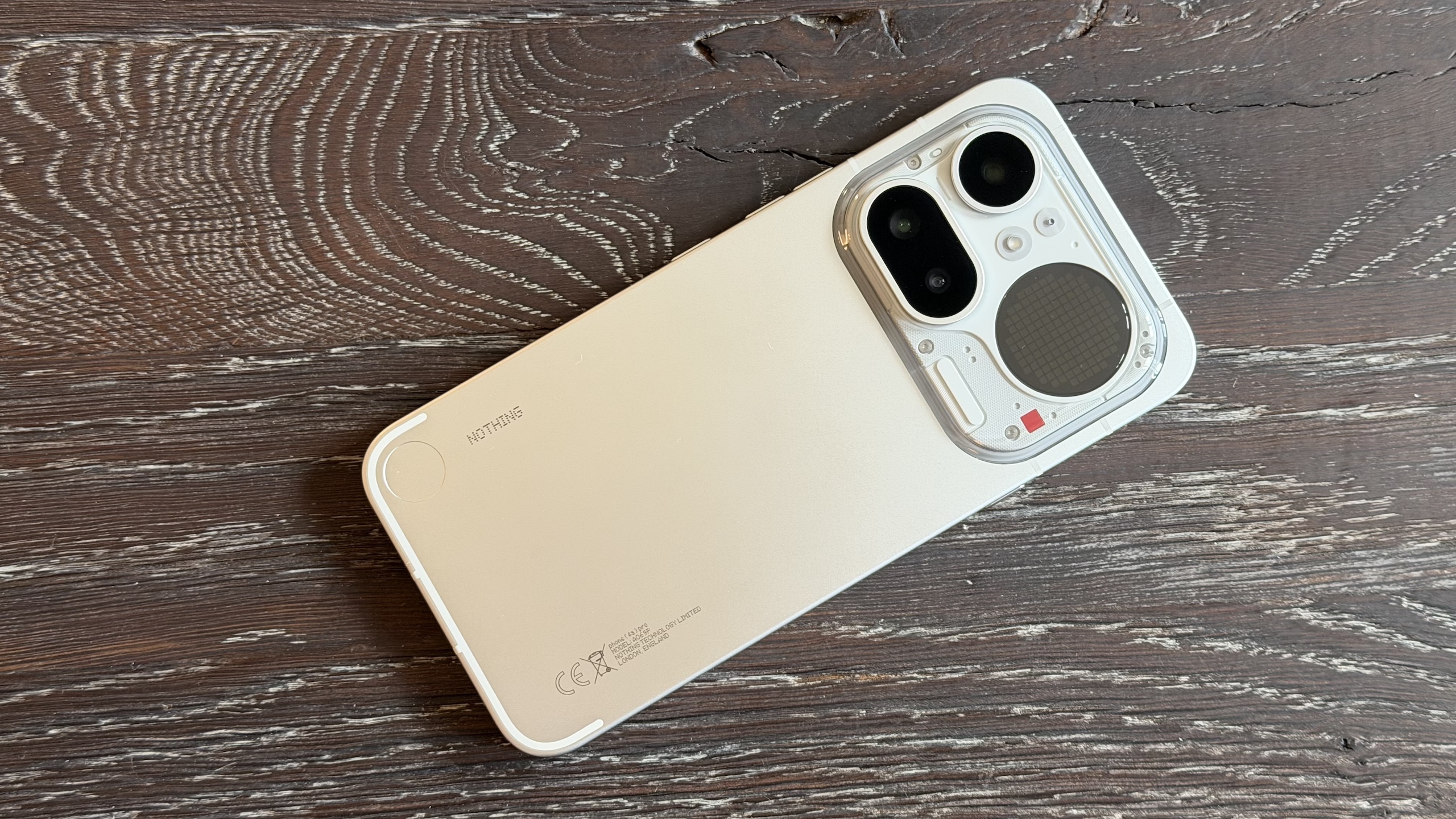
The transparent look that has characterised Nothing since the Phone (1) is largely a thing of the past. The Phone (4a) Pro is constructed entirely from aluminium and measures just 7.95 mm in thickness. This makes it the slimmest Nothing phone to date.
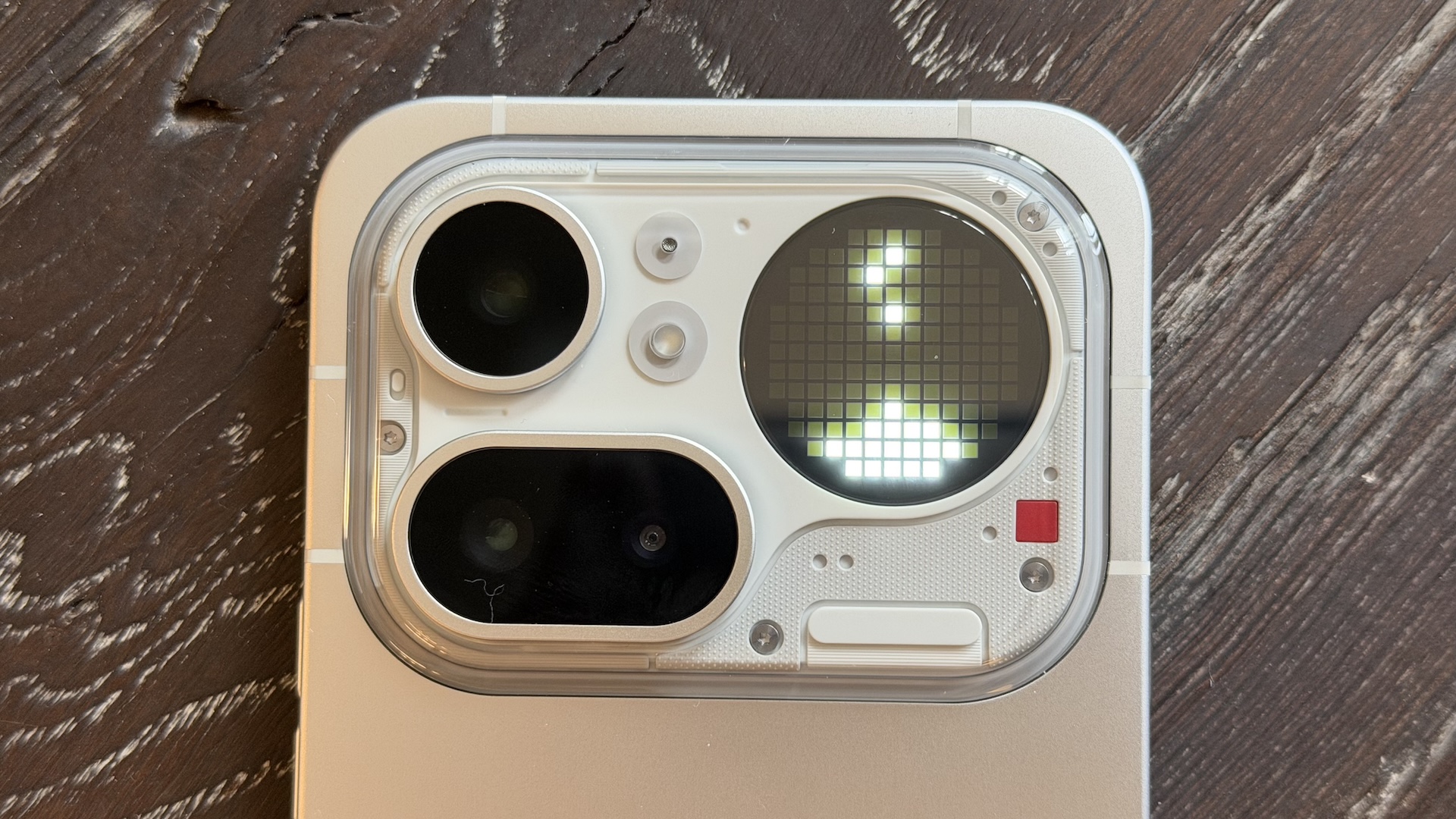
The transparency is limited to the camera module, which is made from 3D-moulded plastic and resembles Nothing’s own headphones. The phone is still unmistakably Nothing, but the design is more mature than before.
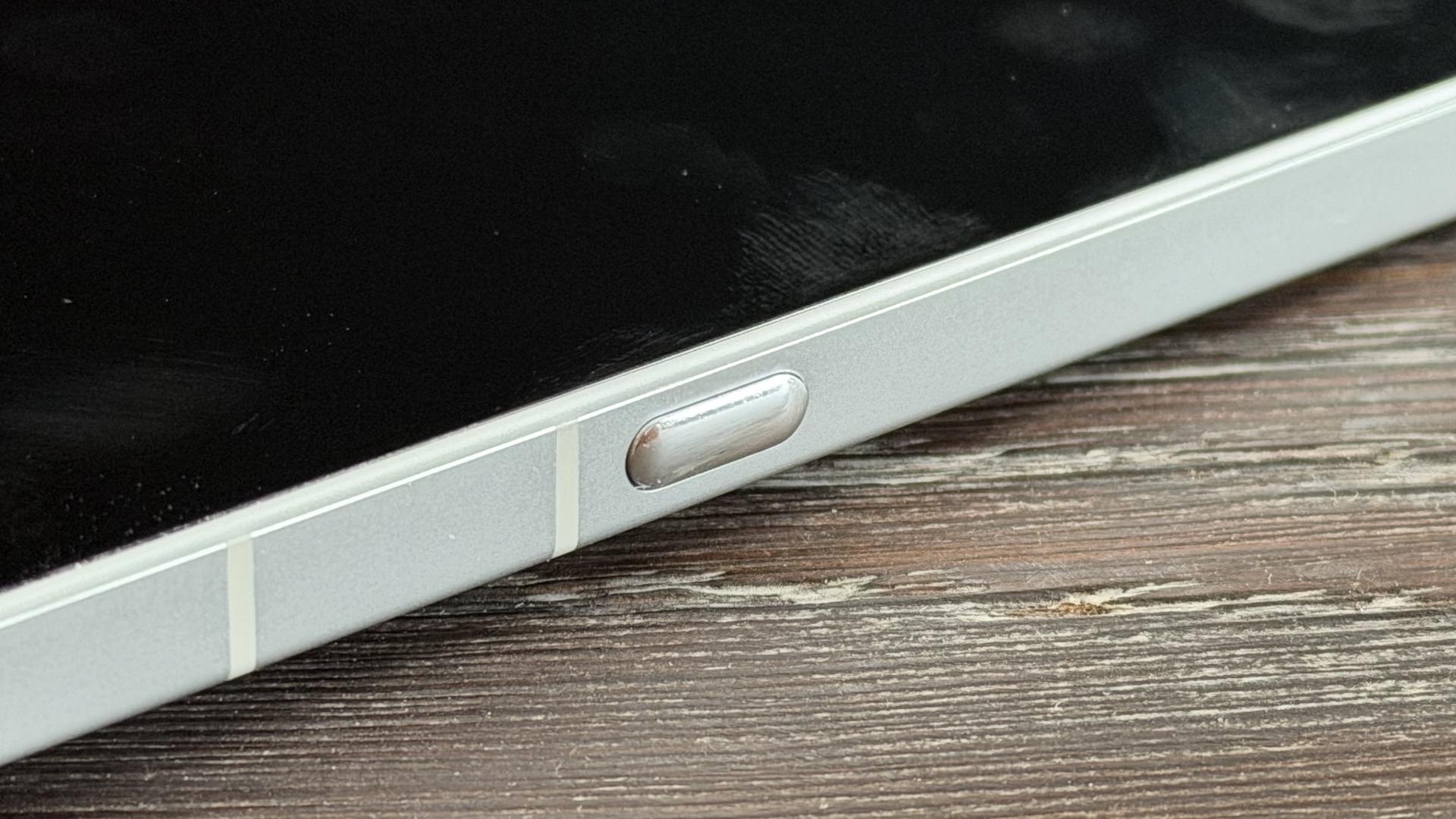
The build feels solid and sturdy. Nothing states that the phone is 42 per cent more bend-resistant than its predecessor, and the IP65 rating protects against dust and water splashes. This is an upgrade from the Phone (3a) Pro’s IP64 rating, but still some way off the flagship Phone (3)’s IP68 rating. The screen is protected by Gorilla Glass 7i.
Screen and sound
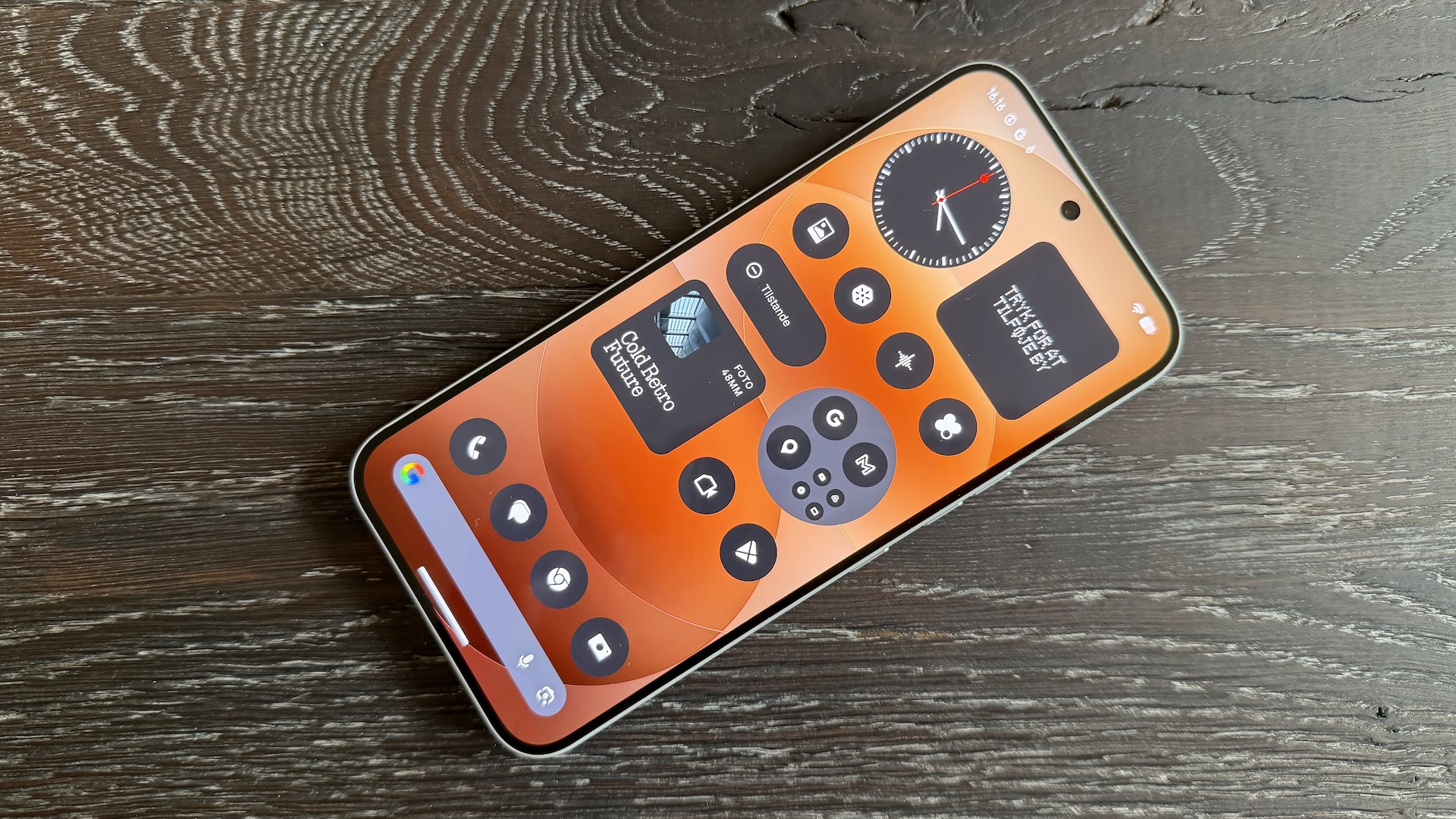
The display is the most significant upgrade. The 6.83-inch AMOLED screen offers 1.5K resolution, a refresh rate of up to 144 Hz and a maximum brightness of a full 5,000 nits. These are figures you normally only see on mobiles costing twice as much.
In practice, the display is excellent. The colours are accurate, the blacks are deep, and readability in direct sunlight is significantly better than on its predecessor. PWM dimming at up to 2,160 Hz is a welcome feature for users with sensitive eyes.
The stereo speakers also deserve praise. The sound is surprisingly rich with good loudness. It is a clear improvement over its predecessor.
Cameras
The camera system consists of three lenses: a 50-megapixel main camera with a Sony LYT-700C sensor, a 50-megapixel periscope telephoto camera with 3.5x optical zoom, and an 8-megapixel ultra-wide-angle camera.
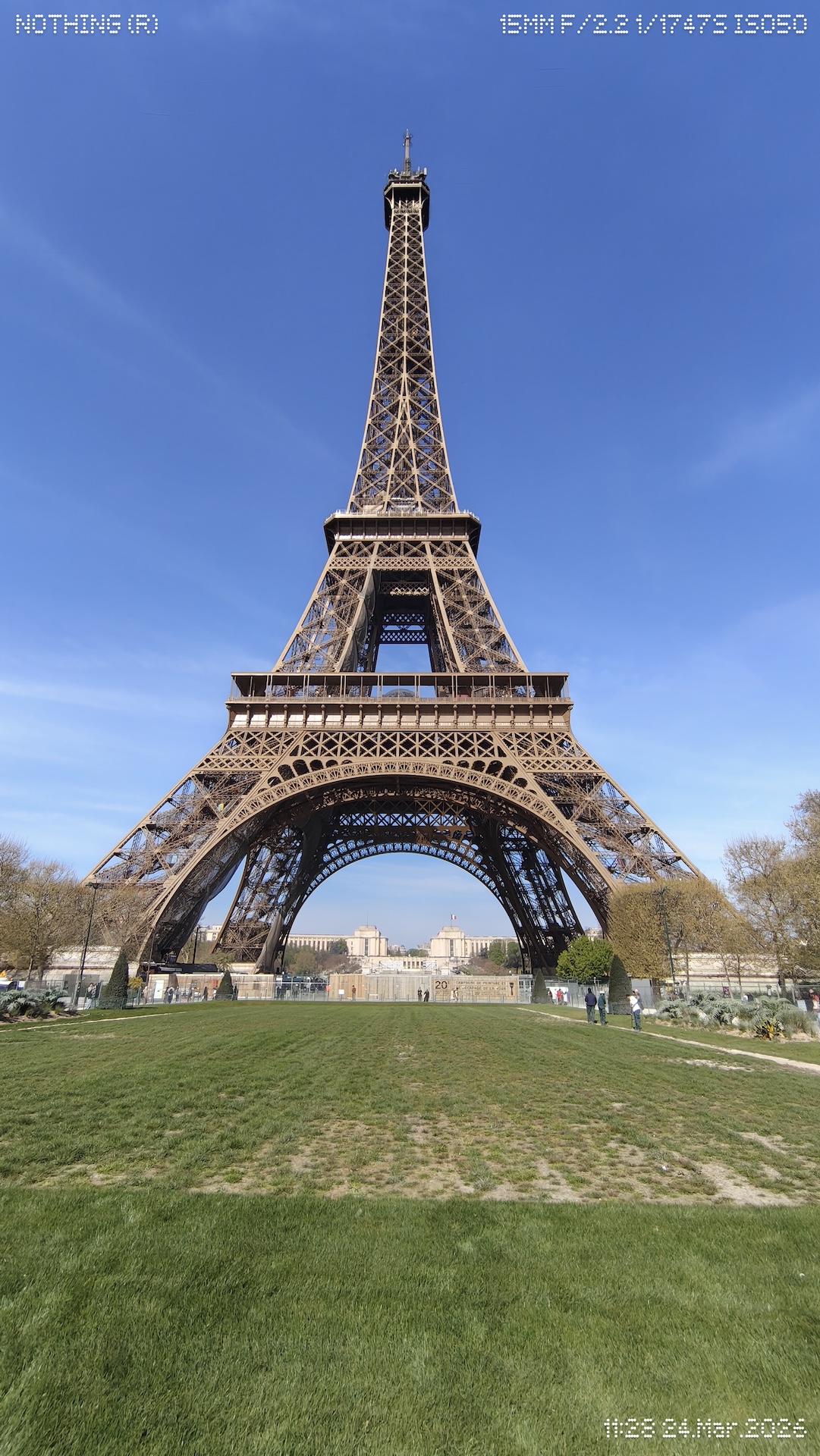
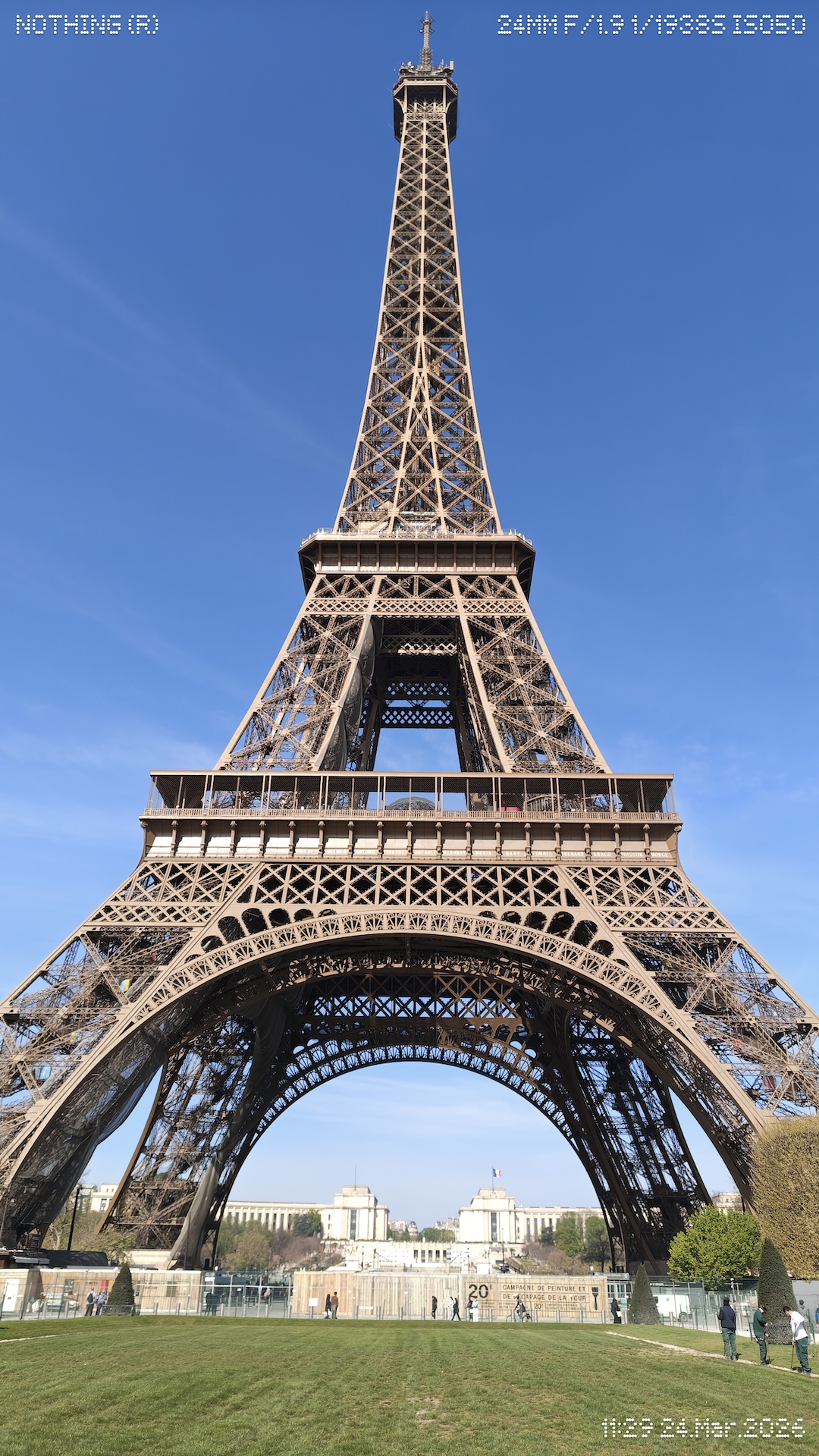
The main camera delivers sharp images with natural colours. Our test shots from Paris show fine detail in complex structures such as the Eiffel Tower’s iron framework, and the HDR balance between light and dark areas is satisfactory.
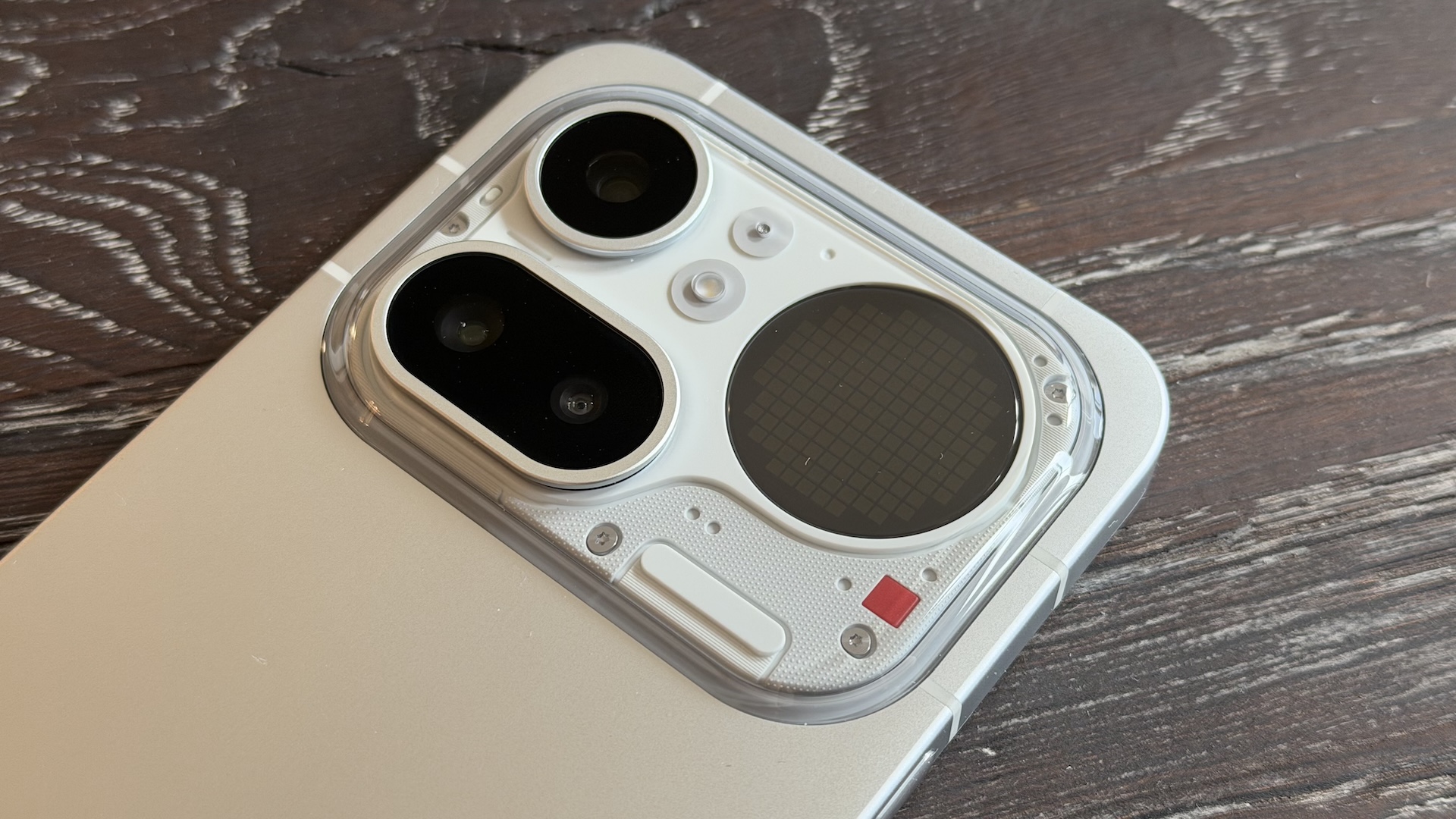
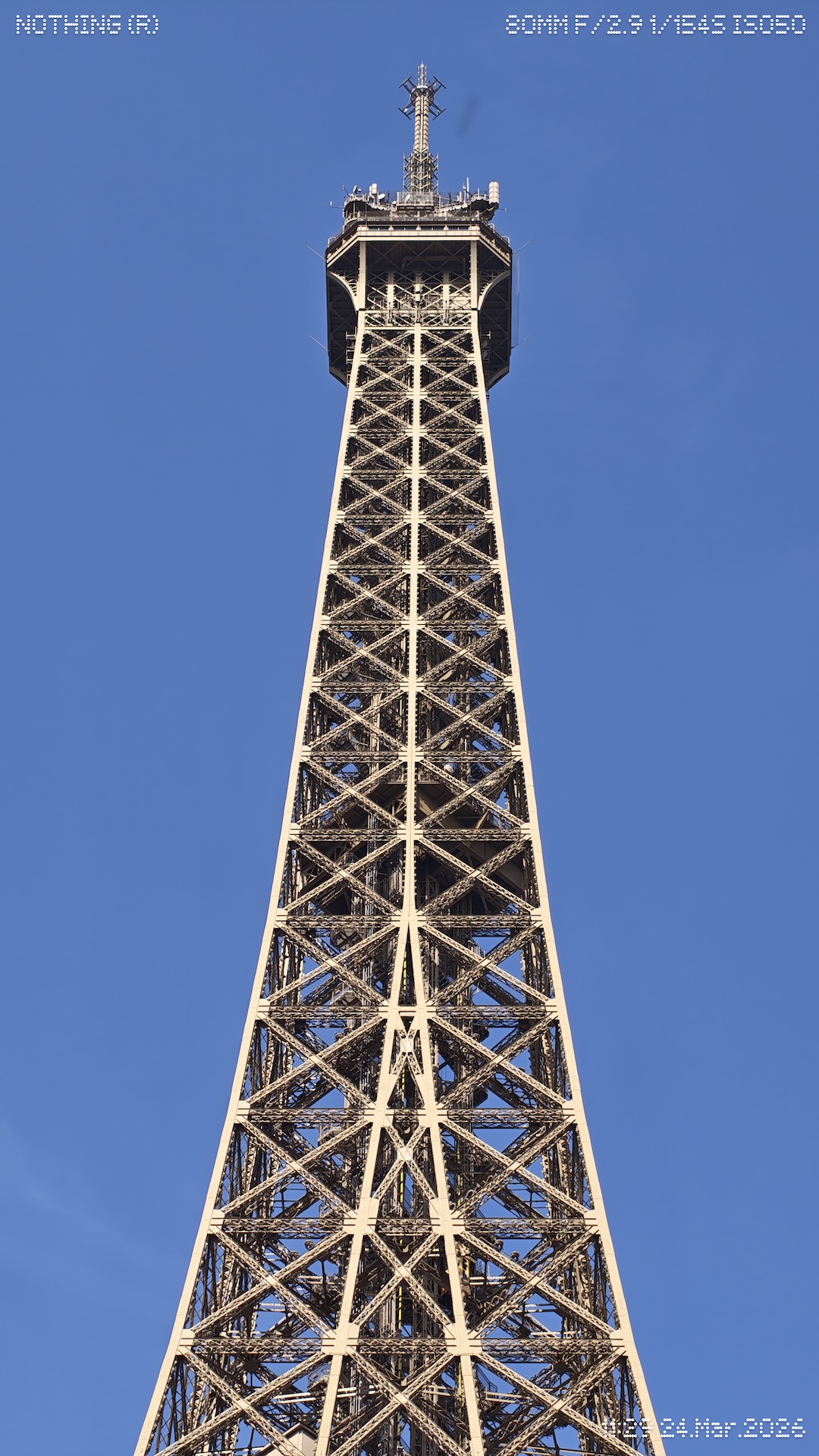
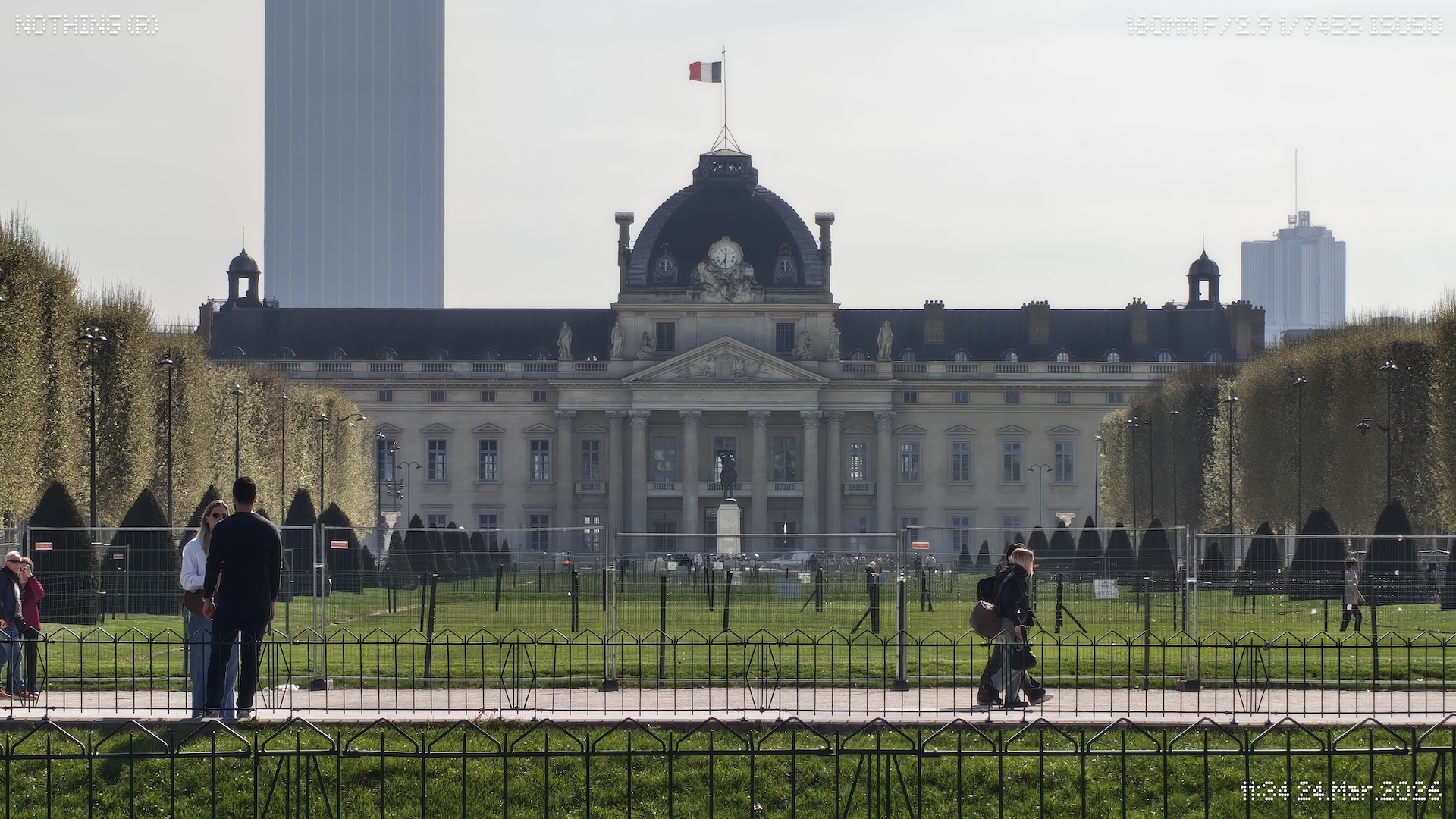
The periscope telephoto camera is the main attraction. A 3.5x optical zoom is rare in this price range, and the images at maximum zoom are sharp with good contrast. The sensor is the same Samsung JN5 found in the far more expensive flagship Phone (3), and this is evident in the results.
The ultra-wide-angle camera, on the other hand, is disappointing. With only 8 megapixels, it lacks detail, and the quality drops noticeably towards the edges. This is where Nothing has cut corners.
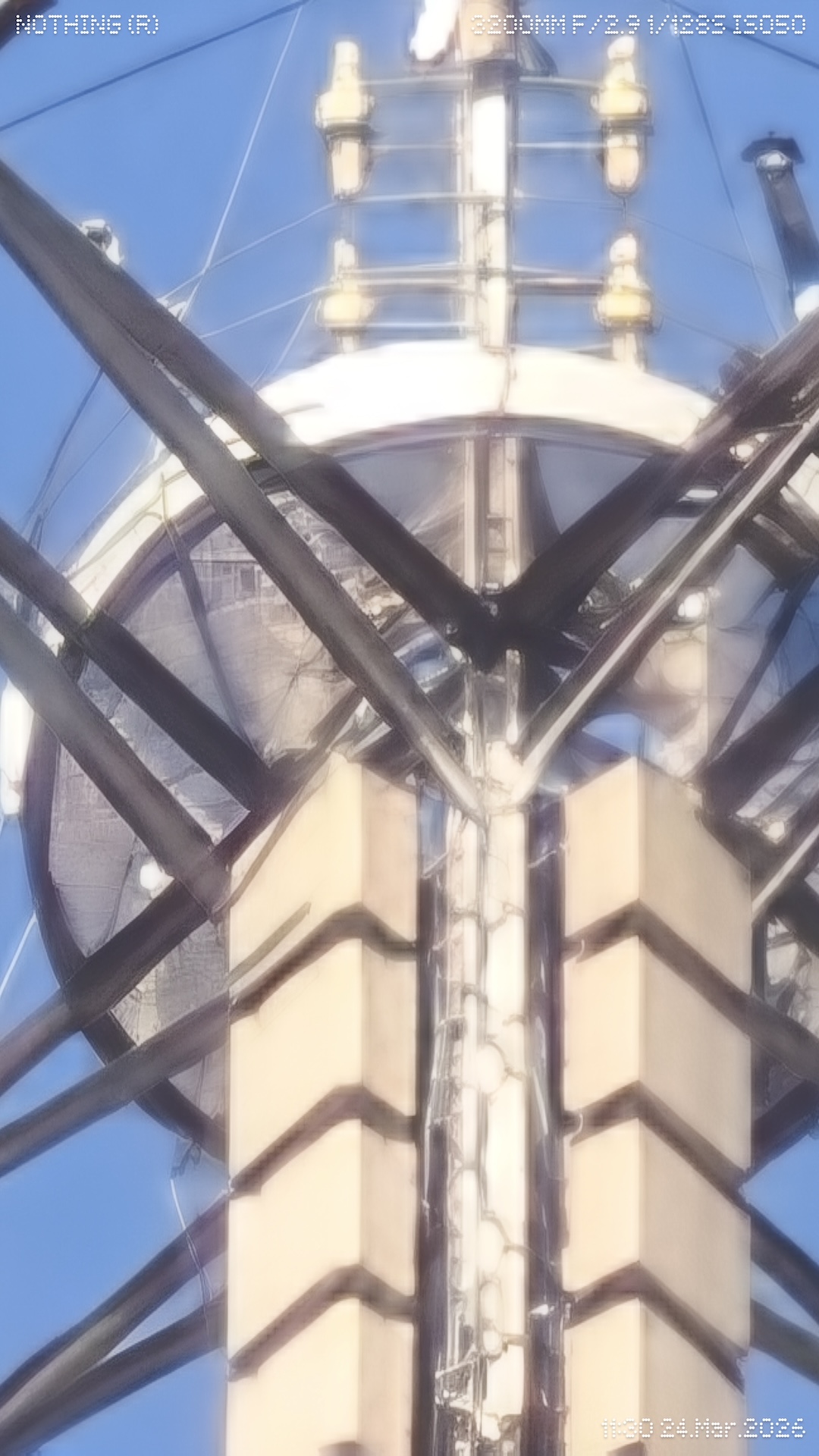
You can safely ignore the 140x ultra-zoom that Nothing likes to highlight in its marketing. At extreme magnifications, the images are simply AI-generated mush with no real detail.
Performance and features
The Snapdragon 7 Gen 4 delivers solid everyday performance. Apps open quickly, and Nothing OS 4.1 on top of Android 16 feels responsive. A 5,300-square-millimetre vapour chamber system keeps temperatures down under load.
The benchmark figures are acceptable, but not impressive. In Geekbench 6, the phone scores 1,297 in single-core and 4,132 in multi-core. That’s better than its predecessor, but compared to direct competitors such as the Oppo Reno14 5G and Google Pixel 10a, both of which cost the same or less, the Phone (4a) Pro is merely on a par. The Pixel 10a outperforms it in both AnTuTu and PCMark. In other words, performance isn’t a factor in choosing this phone.
Nothing OS 4.1, on the other hand, is clean and free of bloatware. The AI tools can be accessed via the dedicated Essential Key, which is now located on the left-hand side of the phone – and Essential Space works well as an AI-organised notebook.
The Glyph Matrix, featuring 137 mini-LEDs, is taken directly from the Phone (3). It is 57 per cent larger and twice as bright as the Glyph Interface found on its predecessor. The clock, timer and notifications make the feature genuinely useful in everyday life – not just a gimmick.
The 5,080 mAh battery supports 50 W fast charging and goes from 0 to 100 per cent in 64 minutes. Wireless charging is missing because the aluminium construction prevents it. That’s a shame – the rival Google Pixel 10a, for example, supports wireless charging at the same price.
The biggest complaint is the update policy. With only three years of Android updates, Nothing lags far behind. Google offers seven years, Oppo offers five. This is the most obvious weakness of an otherwise strong mobile phone.
Conclusion
The Nothing Phone (4a) Pro is an impressive mid-range smartphone that takes the best features from the flagship Phone (3) and packs them into a sleek metal design for under €600. The display is in a class of its own, the periscope telephoto camera delivers images far better than one might expect in this price range, and Glyph Matrix has finally become a feature with real everyday value.
However, there are a few compromises that drag the overall rating down slightly. Performance is merely on a par with the competition, the ultra-wide-angle camera is disappointing, wireless charging is missing, and three years of Android updates is too little when Google and Oppo promise a significantly longer lifespan. If you want the best camera for the price, the Phone (4a) Pro is an obvious choice. If you want the most future-proof mobile, you might want to look elsewhere.

We think
A periscope camera with 3.5x optical zoom, which is rare in this price range. An incredibly bright 144 Hz AMOLED display. A sleek metal unibody design that feels far more expensive than its price tag. Glyph Matrix with genuinely useful features for everyday use. Surprisingly good sound from the stereo speakers. Only three years of Android updates, whereas competitors offer five to seven. No wireless charging due to the aluminium build. The ultra-wide-angle camera, at just 8 megapixels, is disappointing. The 140x ultra-zoom is pure marketing hype with no real practical use.
569 €
Specifications
- Operating system: Android 16 + Nothing OS 4.1
- Updates: 3 Android updates + 6 years of security updates
- Display: 6.83″ AMOLED LTPS 30–144 Hz (2,800 x 1,260), 440 ppi
- Processor: Qualcomm Snapdragon 7 Gen 4
- Memory and storage: 12 GB RAM / 256 GB storage
- Cameras: 50 MP f/1.88 wide-angle with OIS + 8 MP f/2.2 120° ultra-wide-angle + 50 MP f/2.88 periscope with OIS and 3.5x optical zoom (main) / 32 MP f/2.2 (front)
- Wireless: 5G, Wi-Fi 6, Bluetooth 5.4, NFC, GPS, GLONASS, Galileo
- Dimensions and weight: 163.66 x 76.62 x 7.95 mm / 210 g
- Battery: 5,080 mAh, 50 W fast charging
- Website: nothing.tech
Benchmarks
- Geekbench 6: 1.297 (single-core) / 4.132 (multi-core)
- Geekbench 6 compute: 4.643
- Geekbench AI: 3.476 (CPU) / 1.189 (GPU) / 633 (NNAPI) / 31.539 (QNN)
- AITuTu: 699.005 (general) / NA
- AnTuTu 11: 1.453.209
- 3DMark Wild Life Extreme: 2.091
- PCMark Work 3.0: 12.962
- BrowserBench Speedometer 3.1: 13,8
- Battery test: 9:20 hours
- EU battery: Class A, 63h 24min