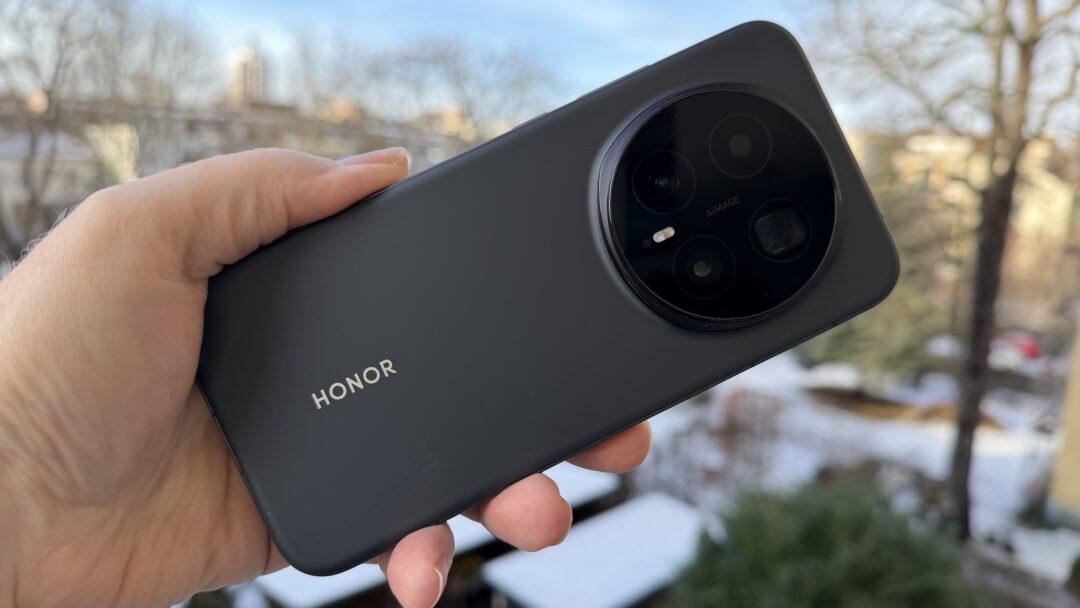

A year ago we tested the Honor Magic7 Pro and concluded that the Chinese manufacturer was back on the market with a smartphone that could compete with the best from Samsung and Apple. Now the sequel is here, and the Honor Magic8 Pro picks up where its predecessor left off, but with a few significant improvements under the hood.
Three things in particular stand out. Firstly, the 200 megapixel telephoto camera is even better in low light thanks to a larger sensor and improved image stabilisation. Second, Honor has worked to make AI features more usable in everyday life with deeper integration of Google Gemini and a dedicated AI button on the side of the phone. And thirdly, the screen now features 4320 Hz PWM dimming, which sounds technical but in practice means that the screen flickers far less than the competition – good news for anyone who spends (too) many hours a day on their phone.
The question is whether the improvements are enough to justify the substantial €1,300 price tag. And whether MagicOS 10 is still too “Chinese” for us Westerners?
The Honor Magic8 Pro in daily use
Can you use the Honor Magic8 Pro without a cover and without fear of falling? The short answer is yes. The phone can withstand rain, dust and accidents at the sink thanks to IP68, IP69 and even IP69K certification. The latter is new compared to its predecessor and means the phone can even withstand high-pressure hosing with hot water. In addition, the Honour’s NanoCrystal Shield glass can survive drops from a height of two metres, according to the manufacturer.
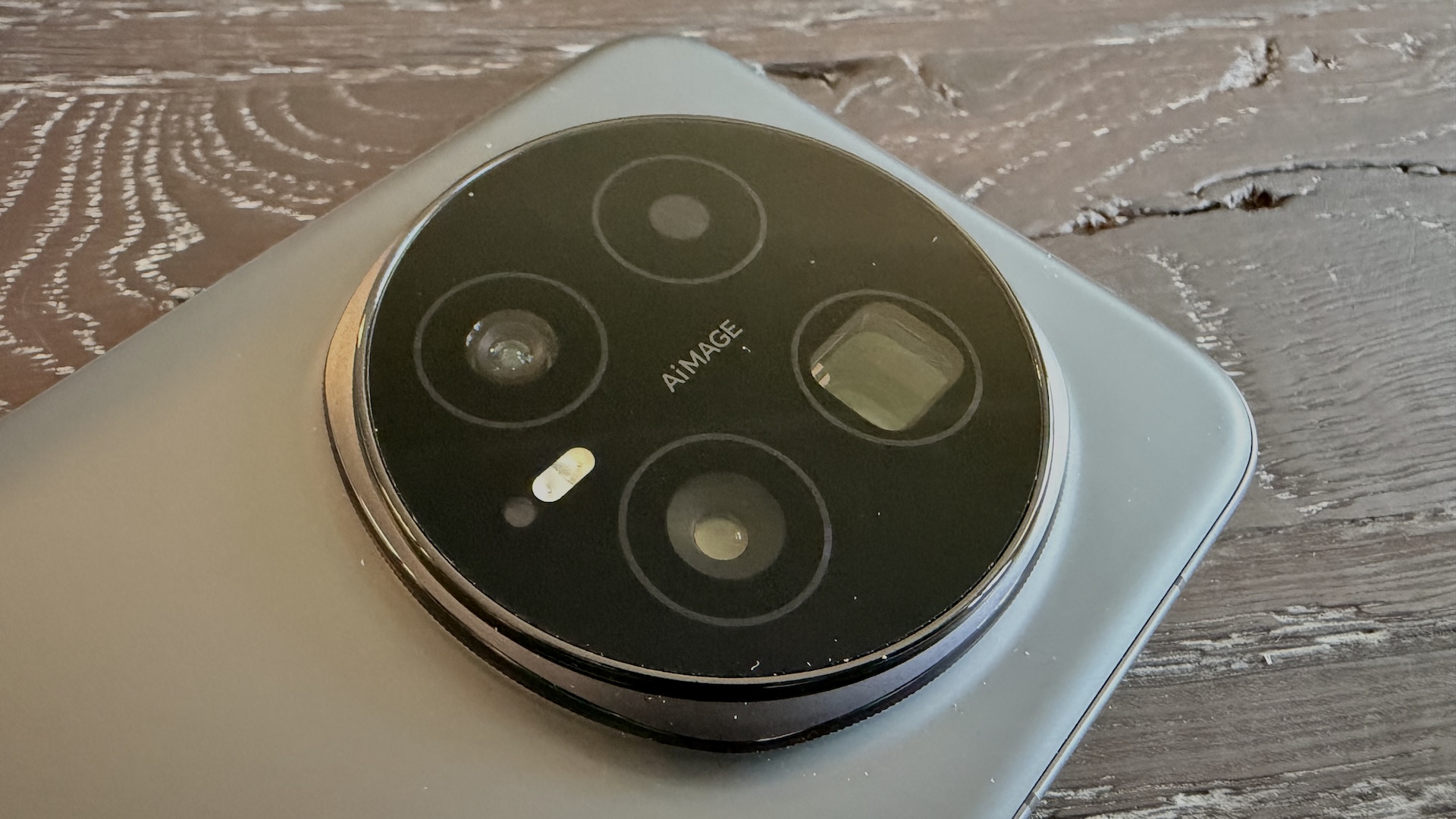
In the hand, the Magic8 Pro feels solid without being bulky. It’s slightly lighter and slimmer than the Magic7 Pro, but the difference is so small that you hardly notice it. The metal frame and round camera module give the phone a luxurious look that matches the price. Our test sample came in matte black, but the phone is also available in Sunrise Gold if you prefer something more eye-catching.
On the other hand, you still have to get used to the phone rocking when you put it on the table. The large camera module protrudes so much that the phone cannot lie flat. This is annoying if you often write messages with your phone lying flat on the table.
The screen as a work tool
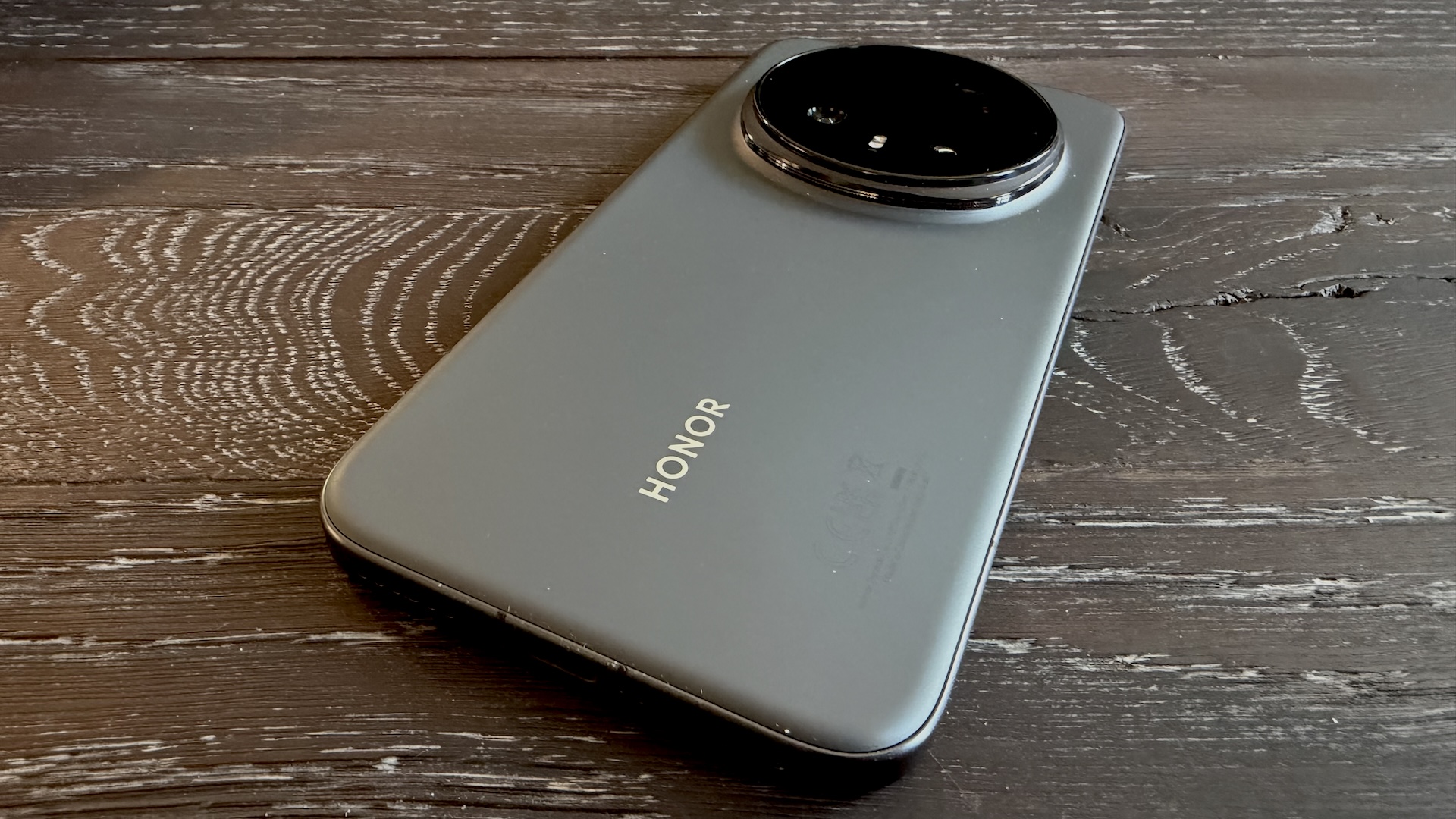
If you use your mobile phone for many hours a day, the screen determines how your eyes feel when you put it down. Honor has done its homework here. The Magic8 Pro features 4320 Hz PWM dimming, which in practice means that the screen flickers far less than most competitors when the brightness is turned down. For users who are sensitive to flicker – and there are far more than you might think – this can be the difference between a headache and a comfortable evening on the sofa.
Add to that a maximum brightness of 6,000 nits for HDR content, which is right up there with the best on the market. In practice, this means the screen is fully readable even in direct sunlight, and HDR videos have a depth and intensity that is otherwise only found on the expensive TV in the living room.
The panel itself is a 6.71-inch LTPO OLED with dynamic refresh rate from 1 to 120 Hz. Compared to its predecessor, the screen is slightly smaller (down from 6.8 inches), but the resolution is largely the same, so the display is still razor sharp.
Honor has also introduced what it calls AI Defocus Display, which simulates the effect of myopia-inhibiting glasses by adjusting how content appears in the periphery. Whether this actually benefits vision in the long term is yet to be proven, but if nothing else, it shows that Honor is incorporating screen health into product development.
The curved screen still separates opinion. Some prefer the soft transition to the edges, others find it impractical when it comes to screen protection and accidental touches. Honor has made the curvature less pronounced than on the Magic7 Pro, but it’s still a curved screen.
The camera in practice
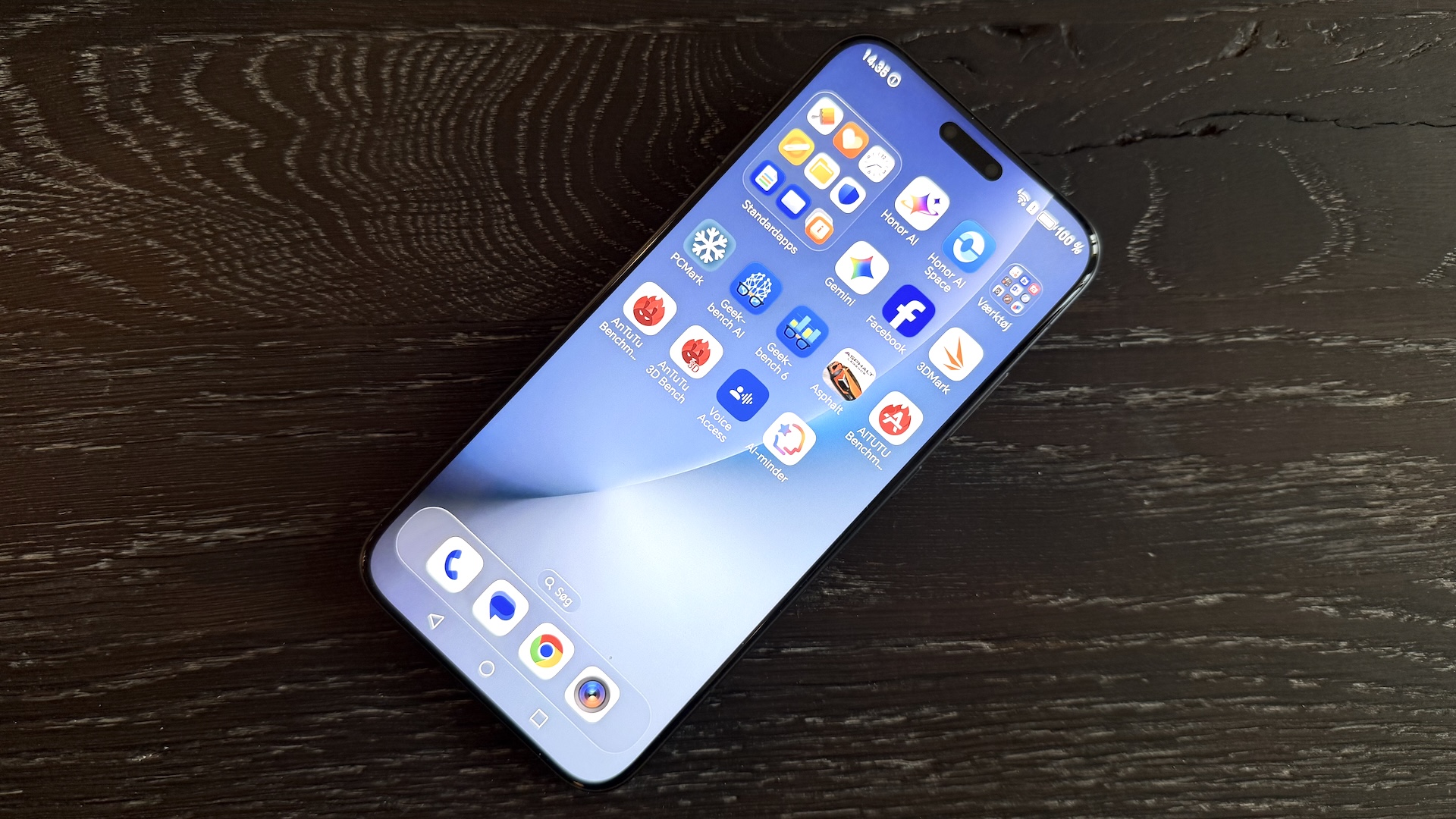
Can the Honor Magic8 Pro capture the concert, the city lights after dark or the family summer holiday in backlight? The short answer is yes – and it’s the telephoto lens that makes the difference.
Honor has equipped the Magic8 Pro with a 200 megapixel periscope telephoto lens with an exceptionally large 1/1.4″ sensor and 3.7x optical zoom. The combination of the large sensor, optical image stabilisation (CIPA 5.5) and AI-based image processing means you can take handheld photos at dusk and night where other smartphones have long since given up. At 3.7x zoom, images are sharp and well-defined with clear detail, low noise and stable focus – even in the so-called ‘blue hour’ where contrasts are difficult and light fades quickly.
The real eye-catcher comes at 10x zoom. Here, the Magic8 Pro manages to preserve significantly more detail than you would normally see from a smartphone in low light. Facades, domes and scaffolding are rendered with surprising clarity and noise levels are kept low. However, there is a downside: In the 10x images, you can occasionally detect a slight ‘AI texture’ where fine patterns appear reconstructed rather than optically rendered. It’s not pure optics, but a significant advance in AI-based image processing.




In daylight, the camera performs just as convincingly. From ultra wide angle (0.5x) to 10x zoom, colours, contrast and sharpness are amazingly consistent across the focal lengths. That’s rare to see on a smartphone. The 50 megapixel main camera with f/1.6 aperture captures images with high micro-sharpness and an almost classic ‘camera look’ with no visible oversharpening. The ultra-wide angle has slightly softer edges but holds geometric lines surprisingly well for such a wide field of view. And the macro mode – with focus distance down to 2.5cm – delivers extremely fine detail with precise focus and high micro-contrast.
What about portraits? Here the Magic8 Pro generally performs well with natural bokeh and precise edge detection. But there’s a catch: the AI tends to lighten and smooth out skin tones, even when the beauty function is turned off. This can give a slightly artificial look that’s not to everyone’s taste.
Video recording, on the other hand, is not the Magic8 Pro’s strongest discipline. It lags behind both the iPhone and the latest Samsung Galaxy S models with visible noise and artefacts in 4K recordings, especially in low light. Recording audio in noisy environments can also cause distortion issues. If video is important to you, consider the alternatives.

Honor AI + Gemini
With the Honor Magic7 Pro, the Chinese company tried for the first time to integrate its own AI tools with Google’s Gemini. It didn’t work well, but this year, things have changed. With the Honor Magic8 Pro, the combination – Google’s Gemini for the heavy lifting in the cloud and Honor’s own AI for what happens locally on the phone – is far more successful.
The division of labour is simple. Gemini handles text generation, summarisation, translation and image recognition. Honor AI takes care of system control, photo editing and context-based suggestions.
In everyday use, the division is quite intuitive. If you want help writing an email or planning a trip, you talk to Gemini. If you want to remove a passer-by from a photo or change a system setting by voice, Honor AI steps in.
One of the most visible new features is the dedicated AI button on the side of the phone. Double tap opens the camera, long press activates AI Screen Suggestions – a feature that analyses screen content and suggests relevant actions. If you’re reading a long article, a single tap summarises or translates it. If you’re looking at a photo, Honor AI offers editing tools. It works surprisingly well.

As mentioned, Gemini integration has improved significantly since Magic7 Pro. Back then, the collaboration between Honor’s interface and Google’s AI felt like a shotgun marriage. With MagicOS 10, the integration is much more successful. Magic Portal 2.0 makes it possible to drag text or images to Gemini with a simple gesture and get answers without leaving the app you’re in. It works. And with three months free access to Google AI Pro, you also get access to the more advanced Gemini features.
However, there are bumps in the road. Some features require a network connection, even when it feels like something that should be done locally. And MagicOS 10 tends to aggressively shut down background apps, so you have to manually allow apps to run in the background to get notifications on time. It’s not an AI problem per se, but it can annoy users who are used to things just working.
The Honour’s AI security features also deserve a mention. Magic8 Pro can detect deepfakes in video calls and warn if the other party is using an AI-generated face or cloned voice. It’s hardly something most people will need in everyday life, but in an age of increasing digital fraud, it’s nice to know the feature exists.
Performance
Like the OnePlus 15, the Honor Magic8 Pro is powered by Qualcomm’s latest Snapdragon 8 Elite Gen 5, and in benchmark tests it’s right at the top. In Geekbench 6 it scores 3,632 in single-core and 6,195 in multi-core, while AnTuTu 11 scores almost 1.9 million points. In practice, this means that the phone pulls even the heaviest games and apps without flinching.
Heat build-up is noticeable during longer gaming sessions. The aluminium frame acts as a heat sink and conducts heat away from the processor – good for the electronics, but it can feel uncomfortable in the hand after half an hour of intensive gaming. On the other hand, performance remains stable and the phone doesn’t drop frames to keep the temperature down.
The battery is 6,270 mAh, a significant jump up from the Magic7 Pro’s 5,270 mAh. Honor uses silicon-carbon technology in the cells, which provides higher energy density than traditional lithium batteries. In our standard test, the Magic8 Pro lasted 9 hours and 50 minutes, which is still on par with its predecessor. The extra battery is primarily used to power the more powerful processor and brighter screen, rather than for longer screen time.
On the other hand, charging is lightning fast. With 100 watt cable charging, the phone goes from 0 to 100 per cent in under an hour. Wireless charging is up to 80 watts if you use Honour’s own SuperCharge charger. This is faster than many competitors’ wired charging.


Conclusion
The Honor Magic8 Pro is a mature successor to last year’s Magic7 Pro. The improvements aren’t revolutionary, but they hit the right spots: the telephoto camera is now among the best on the market in low light, the AI integration with Gemini works far better than before, and the 4320Hz PWM dimming of the screen is a real plus for anyone who uses their phone for many hours a day.
The €1,300 price tag is high, but it’s still slightly cheaper than the competition from Samsung and Apple. And unlike its predecessor, the Magic8 Pro no longer feels like a compromise – the Chinese smartphone is a real alternative to the Galaxy S25 Ultra and iPhone 17 Pro.
There are still bumps in the road. MagicOS 10 takes some getting used to, especially when it comes to notifications and background apps. And if video is more important than photos, you should look elsewhere. But for those who primarily want an excellent camera phone with long battery life and fast charging, the Honor Magic8 Pro is hard to beat.

We think
Excellent telephoto camera, especially in low light, and display with 4320Hz PWM dimming is easy on the eyes. Highly successful integration of Honor AI and Gemini, plus fast charging and solid build quality, even with IP69K certification. Portrait mode lightens skin tones unnaturally and when shooting video the quality sometimes lags. Annoyingly, MagicOS 10 is very aggressive at closing apps running in the background.
1299 €
Specifications
- Operating system: Android 16 + MagicOS 10
- Updates: 7x Android + 7 years security
- Display: 6.71″ LTPO OLED 1-120 Hz (2,808 x 1,256), 458 ppi
- Processor: Snapdragon 8 Elite Gen 5
- Memory: 12 GB RAM / 512 GB storage
- Cameras: 50 Mp f/1.6 wide angle w. OIS + 50 Mp f/2. 0 ultra wide angle (122°) + 200 Mp f/2.6 telephoto w. OIS (primary) / 50 Mp f/2.0 (front)
- Wireless: 5G, Wi-Fi 7, Bluetooth 6.0, NFC, GPS, GLONASS, Galileo, BeiDou
- Dimensions / Weight: 161.2 x 75 x 8.4 mm / 219 g
- Battery: 6,270 mAh, 100 W fast charging + 80 W wireless charging
- Web: honor.com
Benchmarks
- Geekbench 6: 3.632 (single-core) / 6.195 (multi-core)
- Geekbench 6 GPU: 23.843
- Geekbench AI: NA (CPU) / 3.962 (GPU) / 578 (NNAPI) / 76.857 (QNN)
- AITuTu: 2.551.309 (general) / 828.933 (LLM)
- AnTuTu 11: 1.893.009
- 3DMark Solar Bay unlimited: 10.524
- PCMark Work 3.0: 18.370
- Browserbench Speedometer 3: 11,8
- Battery test: 9:50 hours